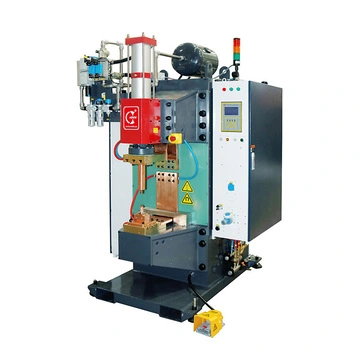
In modern manufacturing, efficiency, reliability, and precision are crucial for maintaining production quality. One technology that has become indispensable for assembly lines across the automotive, electronics, and metal fabrication industries is the nut welder. Designed to securely attach nuts to metal surfaces quickly and accurately, nut welders save time, reduce labor costs, and ensure consistent joint integrity. In this guide, we’ll explore the principles, applications, comparisons, and best practices of nut welding, highlighting why Heron Welder is the preferred partner for industrial welding solutions.
What is a Nut Welder?
A nut welder is a specialized resistance welding machine used to attach nuts to metal components. Unlike traditional mechanical fastening, nut welding creates a strong metallurgical bond between the nut and the workpiece using heat and pressure. This eliminates the need for pre-drilled holes, rivets, or additional fasteners, streamlining production while maintaining structural integrity.
Heron Welder offers a range of nut welding machines that are compatible with various materials, including steel, stainless steel, and aluminum, and can be seamlessly integrated into automated assembly lines.
How Nut Welders Work
Nut welding operates on the principle of resistance spot welding. The process involves the following steps:
- Placement: The nut is positioned on the designated metal surface, often using robotic arms for precision in automated lines.
- Current Application: A high-amperage current passes through the nut and the metal surface, generating localized heat.
- Fusion: The heat melts the metal under the nut, creating a metallurgical bond.
- Cooling and Solidification: The joint solidifies under controlled pressure, forming a strong, durable connection.
This method ensures minimal distortion and preserves the integrity of surrounding material, making it ideal for high-precision manufacturing.
Applications of Nut Welders
Nut welders are widely used in industries where strong, reliable fastening is critical. Key applications include:
- Automotive Manufacturing: Attaching nuts to body panels, chassis components, and assembly fixtures.
- Electrical Panels and Enclosures: Securing nuts for connectors, cable management systems, and grounding points.
- Metal Fabrication: Fastening nuts in machinery housings, brackets, and structural assemblies.
- Aerospace and Defense: Ensuring lightweight yet strong fastenings in critical components.
By integrating nut welders into production lines, manufacturers reduce cycle times and improve product quality while maintaining repeatability across high-volume operations.
Types of Nut Welders
Heron Welder provides a variety of nut welding solutions to meet diverse industrial needs:
1. Manual Nut Welders
Ideal for small workshops or low-volume production, these machines allow operators to position nuts manually. They are cost-effective while maintaining precision for small-scale operations.
2. Semi-Automatic Nut Welders
Semi-automatic models combine operator control with mechanized welding, offering faster cycle times and consistent joint quality.
3. Fully Automated Nut Welding Systems
For high-volume OEMs and automated factories, Heron’s robotic nut welding solutions integrate seamlessly into production lines, capable of handling multiple welding points per cycle with minimal human intervention.
Nut Welding vs. Traditional Fastening
When comparing nut welding to traditional mechanical fastening methods, several advantages emerge:
| Feature | Nut Welding | Mechanical Fasteners |
|---|---|---|
| Speed | High-speed automated cycles | Slower, manual labor required |
| Strength | Strong metallurgical bond | Dependent on torque and alignment |
| Material Integrity | Minimal distortion | Potential damage from drilling or torque |
| Automation Friendly | Highly compatible | Limited integration |
| Maintenance | Low | Higher, due to loosening over time |
Nut welding is particularly advantageous in automated and high-volume manufacturing, where consistency, speed, and reliability are paramount.
Best Practices for Nut Welding
To ensure optimal performance and joint quality, manufacturers should follow these best practices:
- Proper Material Selection: Match the nut and base material to prevent weak joints or excessive spatter.
- Correct Current and Pressure Settings: Adjust welding parameters according to nut size and metal thickness.
- Regular Maintenance: Inspect electrodes, cooling systems, and electrical contacts to maintain consistent weld quality.
- Integrate Automation: Utilize robotic arms or feeders for precise nut placement and faster cycle times.
- Test and Validate: Conduct pull-out and torque tests to ensure compliance with industry standards.
Heron Welder’s machines are engineered with advanced control systems to simplify these practices and ensure consistent, high-quality results across every production cycle.
Why Choose Heron Welder for Nut Welding
With decades of experience in industrial welding and metal joining, Heron Welder is a trusted partner for OEMs, automation integrators, and factory decision-makers. Key advantages include:
- Customized Solutions: From standalone machines to fully integrated robotic lines, Heron designs systems tailored to your production needs.
- Advanced Technology: MFDC and capacitor discharge welding options for precise heat control and energy efficiency.
- Global Support: Comprehensive training, maintenance, and technical support worldwide.
- Industry Expertise: Decades of experience in automotive, electronics, metal fabrication, and industrial automation sectors.
Heron’s nut welding solutions combine precision, efficiency, and reliability, making them a top choice for manufacturers seeking long-term performance and return on investment.
FAQs About Nut Welders
1. Can nut welders be used on aluminum?
Yes, modern nut welders, including Heron’s MFDC models, can weld aluminum nuts with proper parameter settings.
2. How fast is a nut welding cycle?
Cycle times vary by machine type but typically range from 1–3 seconds per weld in automated systems.
3. Is nut welding better than using rivets?
Nut welding provides stronger metallurgical bonds, higher durability, and better automation compatibility compared to rivets.
4. Can nut welders be integrated into robotic production lines?
Absolutely. Heron offers fully automated robotic nut welding systems for high-volume, precision applications.
5. What maintenance is required for nut welders?
Regular electrode inspection, cleaning, and calibration of current and pressure settings are essential for consistent performance.
Conclusion: Optimize Your Production with Heron Nut Welders
Nut welding is an essential technology for manufacturers seeking faster production, stronger fastening, and reliable automation integration. With Heron Welder’s innovative machines and expert support, your factory can achieve consistent, high-quality joints while reducing labor costs and production time.
Request a quote today or consult Heron’s team to design a customized nut welding solution tailored to your production line and industry requirements. Unlock the full potential of industrial fastening with precision, efficiency, and innovation.