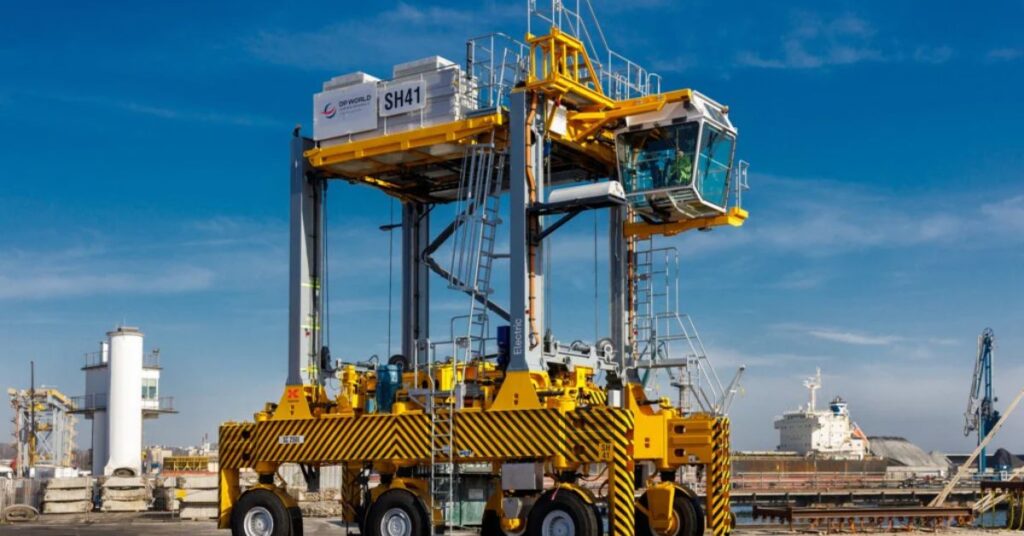
Modern ports operate under constant pressure to move higher cargo volumes in less time while maintaining safety and precision. With global trade expanding and vessel sizes increasing, efficient container handling has become a decisive factor in port competitiveness. Straddle Carriers play a vital role in meeting these demands by offering flexibility, speed, and space optimization across container terminals. Their ability to lift, transport, and stack containers independently makes them one of the most efficient solutions for port handling operations today.
Understanding the Role of Straddle Carriers in Ports
Straddle carriers are mobile machines designed to lift containers within their frame, allowing them to move freely across terminal yards without additional handling equipment. Unlike fixed cranes or reach stackers, these machines can directly pick containers from vessels, transport them across the yard, and stack them with precision. This multi-functional capability reduces dependency on multiple machines and minimizes idle time in busy port environments.
Their ability to operate efficiently in confined spaces makes them particularly valuable in ports where land availability is limited and operational speed is critical.
Faster Container Movement and Reduced Handling Time
One of the biggest advantages of straddle carriers is their contribution to faster container movement. By combining lifting, transporting, and stacking into a single process, they significantly reduce handling cycles. Containers no longer need to be transferred multiple times between different machines, which helps lower turnaround times for ships and trucks.
This speed directly improves port throughput, enabling terminals to handle more cargo without expanding infrastructure. Faster operations also mean reduced congestion at docks and smoother coordination between sea and land transport.
Improved Yard Utilization and Space Efficiency
Efficient use of yard space is essential for modern ports, especially those handling large volumes of containers daily. Straddle carriers allow containers to be stacked higher and organized more systematically, optimizing available space. Their mobility enables flexible yard layouts that can be adjusted based on traffic flow and cargo demand.
By reducing the need for fixed stacking systems, ports gain the flexibility to adapt quickly to changing operational requirements, seasonal demand, or unexpected cargo surges.
Enhanced Safety and Operational Control
Safety is a major concern in port handling operations due to the movement of heavy containers and machinery. Straddle carriers offer improved visibility and control for operators, reducing the risk of collisions and accidents. Many modern units are equipped with advanced stability systems, automated guidance, and safety sensors that enhance operational accuracy.
By minimizing manual intervention and reducing cross-traffic between machines, ports can maintain safer working environments while increasing productivity.
Integration with Industrial Handling Systems
Beyond container logistics, ports often handle specialized industrial materials that require precise and reliable handling. Equipment such as Aluminium Extrusion Equipment is commonly used in manufacturing zones connected to ports, where raw materials and finished products must be moved efficiently.
When port handling systems align seamlessly with industrial material-handling equipment, the result is a streamlined supply chain. Straddle carriers support this integration by enabling smooth transitions between port yards, storage facilities, and industrial dispatch areas, ensuring consistent flow and reduced delays.
Cost Efficiency and Long-Term Operational Benefits
While the initial investment in straddle carriers may be significant, their long-term benefits often outweigh the costs. Reduced labor dependency, lower fuel consumption per container moved, and minimized maintenance downtime contribute to overall cost savings. Their durability and adaptability also extend equipment lifespan, making them a sustainable choice for port authorities.
Additionally, their ability to operate independently reduces bottlenecks caused by equipment shortages, ensuring uninterrupted port operations even during peak periods.
Supporting the Future of Smart Ports
As ports move toward automation and digitalization, straddle carriers are evolving to meet future demands. Automated and semi-automated models can integrate with terminal operating systems, enabling real-time tracking, route optimization, and predictive maintenance. These advancements further enhance efficiency while reducing human error.
By adopting advanced handling solutions, ports position themselves for long-term growth and resilience in a rapidly changing global trade environment.
Conclusion
Straddle carriers have become a cornerstone of efficient port handling by improving speed, safety, and space utilization. Their versatility allows ports to handle growing cargo volumes without compromising operational control or safety standards. When combined with complementary industrial handling systems, they contribute to a fully optimized logistics ecosystem. As ports continue to modernize, straddle carriers will remain essential to achieving higher efficiency and sustainable growth.