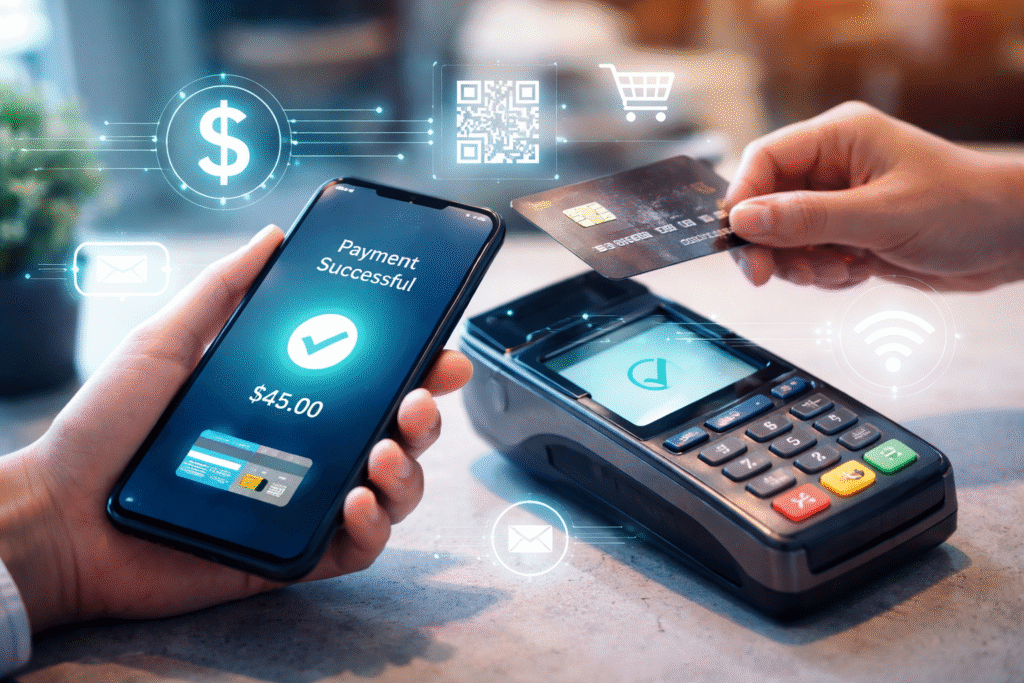
The worldwide payment system has been radically changed as digital payment options are gradually replacing cash in hand. There are various new payment methods like m, wallets, contactless cards, internet banking, p2p transfers, etc. which have led to the disappearance of cash in daily transactions. Technological changes, changes in consumer behavior and changes to economic infrastructure are the three major factors which explain this transition being more than just a matter of convenience.
Understanding the Growth of Digital Payments
Digital payments are basically any payments made digitally without the physical exchange of money. The use of digital payment systems has been booming in the last 10 years, shrinking the reason to physically visit a bank, making smartphones, internet connection and secure financial technologies readily available; these have all contributed to this phenomenon.
The major catalyst for the growth of cashless economies is the consumers’ demand for fast and convenient transactions. Nowadays, consumers expect that their payments should be processed instantly no matter whether they are shopping online, paying bills, or sending money to someone. Mobile payment solutions and e-wallets have simplified these processes making it possible for users to do their transactions in seconds just with a few taps.
Additionally, companies have also been keen on digital payment methods as a means to simplify their processes and avoid the risks linked to cash handling. Paying electronically gives one the advantage of having better records, fewer mistakes, and more clarity. Hence, it is quite normal to find that most shops and service providers are giving first preference to non, contact and internet payment modes.
Key Technologies Powering Cashless Economies
Mobile Wallets and Contactless Payments
Mobile wallets have gained a crucial role in the digital payments ecosystem. Apps that securely store payment information help consumers to transact at both e-commerce and brick, and, mortar outlets. Contactless payment technologies, including near, field communication (NFC) and QR codes, are responsible for further simplifying the transaction process.
These developments facilitate a seamless user experience and implement high, standard security measures simultaneously. Encryption, tokenization, and biometric authentication are essential methods in safeguarding the confidentiality of financial data.
Online Banking and Fintech Innovations
The growth of internet banking has simplified managing one’s finances and even made it more efficient. Users for instance are able to keep track of their accounts, settle bills, and even move money, all without the need to step into a bank. On the other hand, fintech companies are constantly coming up with innovations that improve the level of accessibility and hence, inclusion.
One of the ways that financial technology companies support inclusion is through targeting the unbanked or underserved market segments with alternative credit facilities and digital financial tools. As a result, areas that were traditionally underbanked or where banking infrastructure is minimal, have seen the coming of financial inclusion.
Economic and Social Impacts of Going Cashless
The shift to digital payment methods will have a profound impact on the economy. One of the advantages for the government is that a cashless society will make it easier to detect tax evasion and also reduce the cost of producing and handling money. Because of systematic digital record keeping, it is much easier now to expose necessary financial transfers and to fight against unlawful activities.
From the perspective of the company, digital payments lead to a shortening of the settlement cycle and an increase in overall efficiency. Very often it is the small and medium, sized businesses which, by the way, have direct access to the global market through e, commerce platforms, benefit significantly where electronic transactions constitute a major part.
At the social level, cashless societies may provide consumers with greater convenience and safety. The risk of getting mugged is lower if one has no money to steal and at the same time transactions become easier to make. Nevertheless, this change brings about significant issues such as people’s ability to use digital tools and equal opportunities in obtaining technology devices.
Challenges and Risks in a Cashless Society
Even though there are advantages to digital payments, the transition to a completely cashless economy entails a number of challenges. One of the main issues is cybersecurity because the more we depend on electronic devices, the more vulnerable we become to data breaches and fraud. Banks and other financial institutions, as well as tech companies, should always keep upgrading their security systems.
Another big problem is the digital divide. People don’t all have equal access to a smartphone, good internet, or banking services. The older generation and poor communities might be the ones who find it most difficult to use digital money. It is a matter for government officials to ensure that these problems are solved so that the advantages of going digital with payments can be enjoyed by all.
Privacy is becoming an increasingly important issue for discussion as well. A lot of data is created by electronic transactions which make one wonder how personal financial data is collected and used. Strong rules and open data usage are necessary to keep people’s trust.
The Future of Digital Payments
As technology continues to evolve, digital payments are expected to become more and more a part of our everyday lives. Further financial innovations will come from central bank digital currencies (CBDCs), blockchain, based payment systems, and AI, powered fraud detection, among other things.
While it is unlikely that cash will disappear entirely in the near future, the move towards cashless societies is quite evident. Governments, businesses, and consumers are all gradually adapting to a financial world that is digital, first. One of the major issues for the future is the balance of innovation with security, accessibility, and privacy.
The adoption of digital payments has changed dramatically the ways in which societies store and exchange value. A thorough grasp of the advantages and disadvantages will enable stakeholders to build financial systems that are not only efficient and inclusive but also resilient in a rapidly changing world.