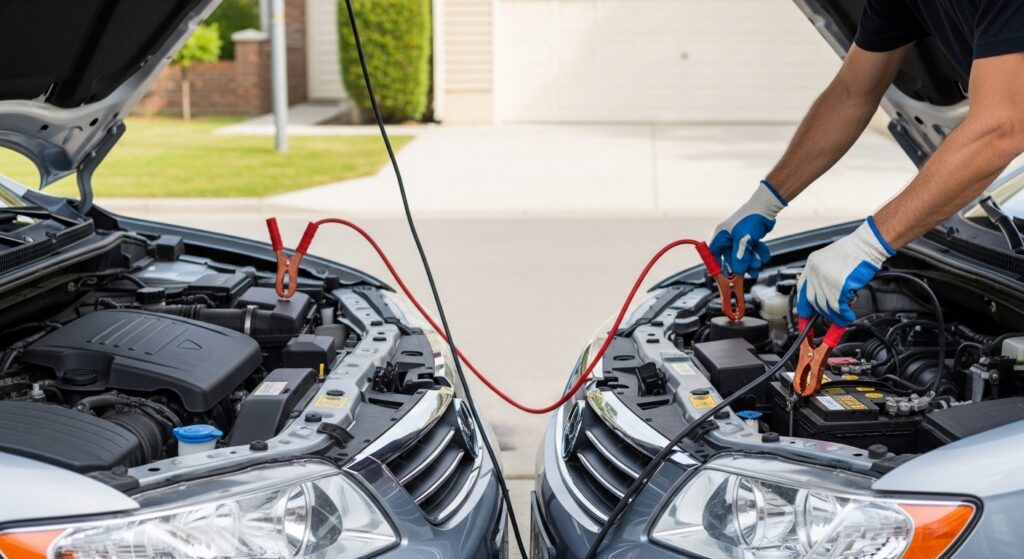
Jump-starting a car is an essential skill for any driver. It involves connecting a dead battery to a charged one. Proper technique ensures a safe and successful jump.
First, locate the batteries on both vehicles. Connect the positive terminals with the red cable. Attach one end of the black cable to the donor car’s negative terminal. Connect the other end to an unpainted metal surface on the dead car. Start the donor car first. Then try to start the dead car. If it doesn’t work, check connections and try again. If unsuccessful, call a mobile mechanic near me for help.
Safety Precautions
Before jump-starting a car, it’s important to ensure both cars are turned off. Also, wear safety gloves and eye protection. Keep any metal objects away from the battery to avoid sparks. Ensure you’re not near flammable materials.
Additionally, avoid smoking or using open flames during the procedure. Double-check that the cables are well-insulated and in good condition. If you’re unsure about any step, consult the car’s manual or seek expert advice. Safety should always be your top priority to prevent injuries or damage to the vehicles.
Gather Necessary Tools
You will need certain items to jump-start a car. A set of jumper cables is essential. Ensure the cables are long enough to connect the two vehicles. These cables should be in good condition. Make sure the clamps are clean and without rust.
Additionally, you might find it helpful to have a battery booster on hand. This can be a lifesaver if another car isn’t available. A pair of safety gloves and eye protection will help keep you safe. Lastly, keep a flashlight handy if you need to work in the dark.
Locate The Battery
The battery in a car is typically located in the engine bay. For most vehicles, it will be situated near the front on either the left or right side. You’ll see two terminals on the top, labeled positive (+) and negative (-).
Some vehicles may have the battery in a different spot, such as under the rear seat or in the trunk. Consult your car’s manual if you’re having trouble finding it. Ensure the area around the battery is clear of debris before proceeding.
Understanding Battery Terminals
Positive terminals are usually marked with a plus sign (+) and often have a red cover. These terminals connect to the car’s positive circuit. Attach the red jumper cable to this terminal first during a jump-start.
Negative terminals, marked with a minus sign (-), typically have a black cover. They connect to the car’s ground system. When jump-starting, attach the black jumper cable to a metal part of the car, not directly to the negative terminal of the dead battery. This reduces the risk of sparks.
Positioning The Vehicles
To begin, park the donor car close to the dead car. Ensure the cars are not touching. Each car should be in a park or neutral with the parking brake engaged. Turn off both engines. Open the hoods to access the batteries.
Arrange the jumper cables close to both batteries. Confirm the cables can reach both vehicles safely. Keep the red and black clamps from touching. Check surroundings to ensure a hazard-free space. This positioning is crucial for a safe and effective jump-start.
Connecting The Jumper Cables
First, connect one end of the red cable to the positive terminal on the dead battery. Attach the other end of the red cable to the positive terminal on the donor battery. Be sure the connections are secure and clean.
Next, connect one end of the black cable to the negative terminal of the donor battery. Attach the other end to an unpainted metal part of the dead car’s engine, not to the negative terminal. This reduces the risk of sparking. Double-check all connections before starting the donor car. Once the donor car is running, attempt to start the dead car.
Starting The Engine
Begin by allowing the donor car to run for a few minutes. This helps charge the dead battery. After waiting, try starting the dead car’s engine. It might take a few attempts.
If the dead car starts, keep it running for at least 20 minutes. This allows the alternator to recharge the battery. If the car doesn’t start after several tries, the battery might need replacement. Disconnect the jumper cables in reverse order of connection. This prevents any unexpected electrical issues.
Disconnecting The Jumper Cables
Start by removing the black cable from the metal part of the previously dead vehicle. Next, detach the same black cable from the donor vehicle. Ensure the cables do not touch any metal parts as you disconnect them. Carefully place the cables away from the battery.
Then, remove the red cable from the positive terminal of the donor battery. Finally, disconnect the red cable from the positive terminal of the previously dead battery. Close the hoods of both vehicles. Store the jumper cables properly. Ensure the previously dead car runs for a while to charge fully.
Troubleshooting Common Issues
Sometimes, jump-starting a car may not work as expected. First, ensure all connections are secure. Check if the clamps are clean and free of corrosion. A loose or dirty connection can prevent the transfer of power.
If the car still doesn’t start, examine the battery. It may be too damaged to hold a charge. You might also have a faulty alternator that won’t recharge the battery. In these cases, consider calling a professional mechanic. Always follow safety measures to avoid injury or damage.
Conclusion
Successfully jump-starting a car requires preparation and caution. Make sure you have all the necessary tools and follow each step carefully. This ensures a safe and effective process.
Prioritize safety measures at all times. Wear protective gear and keep flammable materials away. Properly connect and disconnect the jumper cables to avoid sparks or electric shocks. If you encounter any issues or feel unsure, it’s best to consult a professional. This will help prevent injuries and potential damage to your vehicle.