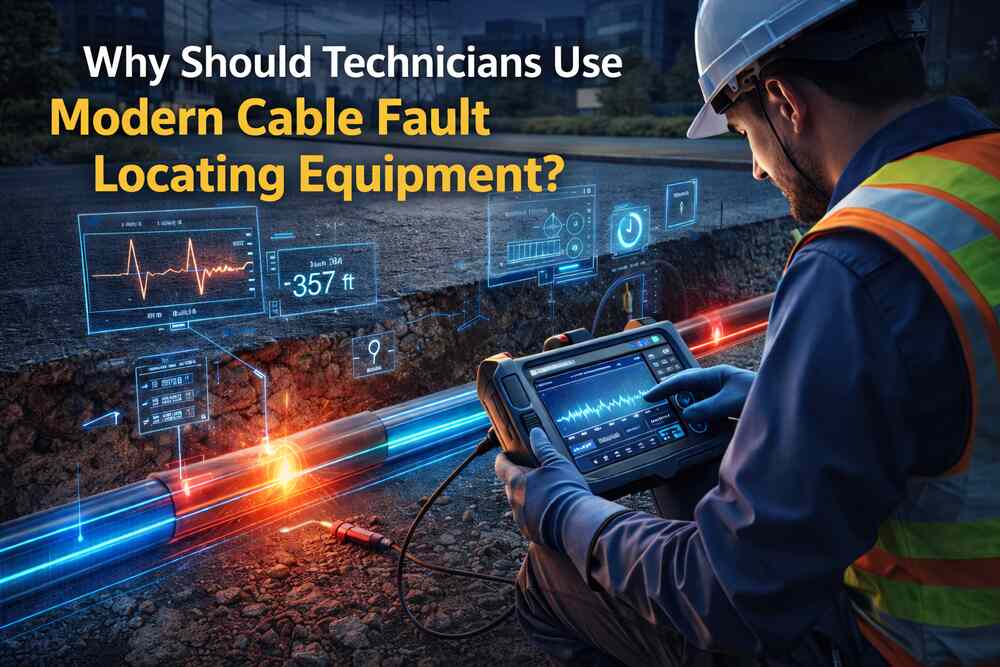
Have you noticed how cable networks are getting more complex while downtime is becoming less acceptable? When a cable fails today technicians don’t just need to fix it fast. They need to find the exact fault quickly without guesswork.
Many technicians ask practical questions like what modern cable fault locators actually does, how it works in real situations, and why traditional methods are no longer enough.
Key Takeaways
• Modern cable fault locating equipment speeds up fault detection and repairs
• Accurate locating reduces unnecessary digging and extra costs
• Advanced tools improve technician safety during diagnostics
• Multiple fault types can be identified more clearly
• Faster repairs reduce system downtime and disruptions
• Digital reporting supports documentation and planning
• User friendly interfaces simplify complex testing
• Long term use leads to cost savings and higher productivity
How it works?
Modern cable fault locating equipment uses advanced testing methods to detect the exact position and type of fault inside a cable. It works by sending controlled signals through the cable and analyzing how they return.
Why modern cable fault locating equipment matters for daily field work?
If you work with electrical or communication cables your daily decisions depend on how fast and accurately you can diagnose a problem. These directly affects how much time you spend searching versus repairing.
When you use precise locating tools you avoid unnecessary digging repeated testing and guess based repairs. This saves effort reduces stress and improves your professional results.
Reasons Technicians Should Use Modern Cable Fault Locating Equipment
Faster fault detection saves valuable time
Time pressure is constant in field work. These helps technicians pinpoint faults in minutes instead of hours.
With advanced signal analysis you can narrow the search area quickly. Instead of opening long cable sections you focus only on the exact fault spot.
Higher accuracy reduces unnecessary excavation
Traditional fault finding often involves trial and error. That approach can damage surrounding infrastructure and increase repair costs.
These provides precise distance measurements to the fault. You dig only where needed. This accuracy protects nearby utilities and keeps work sites cleaner and safer.
Improved safety for technicians and equipment
Working with faulty cables can be risky. Hidden electrical issues may cause shocks or equipment damage.
These includes safety features and controlled testing methods. These tools help you identify hazards before physical contact.
Ability to detect multiple fault types
Cables can fail in many ways such as short circuits open circuits or insulation breakdowns. Older tools may struggle to identify complex faults.
Modern systems can analyze different fault signatures. You get a clearer picture of what went wrong.
Reduced downtime improves service reliability
Every minute of cable downtime affects operations especially in industrial or communication networks. You can restore service faster by using these.
Quick repairs keep systems running smoothly. Clients and organizations benefit from more reliable performance and fewer disruptions.
Better documentation and reporting
Many modern devices store test data and generate digital reports. This feature supports clear communication with clients and supervisors.
Accurate records help you track recurring issues and verify completed work. Documentation also supports compliance with industry standards and maintenance planning.
Easier operation with user friendly interfaces
Modern tools often include intuitive displays and guided testing procedures. Even complex diagnostics become easier to perform.
Technicians can learn these systems quickly. Clear visual feedback reduces mistakes and speeds up decision making.
Cost efficiency over long term use
Some technicians hesitate because modern equipment may seem expensive at first. But the long-term savings are significant.
Faster jobs fewer errors and reduced damage lower operating costs. Over time the equipment pays for itself through improved productivity and reduced rework.
Compatibility with modern cable systems
Today’s cable networks include advanced materials and designs. Older locating methods may not perform well with these systems.
These are built to handle new cable technologies. This compatibility ensures accurate testing across a wide range of installations.
Professional credibility and skill development
Using advanced tools shows commitment to quality work. Clients notice when technicians use professional equipment and modern methods.
These tools also help you develop stronger diagnostic skills. As you gain experience with advanced testing you become more confident and capable in complex situations.
Ending
Modern cable fault locating equipment changes how technicians approach troubleshooting. It brings speed accuracy and safety into daily work. Instead of relying on guesswork you use precise data to guide repairs.
FAQS
Why is modern cable fault locating equipment important for technicians?
Modern cable fault locating equipment helps technicians find problems faster which saves time reduces downtime and improves repair accuracy.
How does modern equipment reduce repair costs for cable faults?
It allows technicians to detect hidden faults without digging large areas which protects infrastructure and lowers repair costs.
How does modern fault locating equipment improve technician safety?
Using advanced tools increases safety by reducing guesswork and limiting direct contact with damaged live cables during inspections.
How does accurate fault detection help technicians work better?
Modern equipment provides accurate data that helps technicians make quick decisions and complete repairs with greater confidence.
How does modern equipment speed up cable repairs?
These devices shorten troubleshooting time so technicians can restore power services faster and improve customer satisfaction.
How does modern fault locating equipment improve efficiency?
Modern fault locators support precise testing which reduces repeated work and helps teams use resources more efficiently.
How does modern equipment reduce damage during repairs?
They help technicians identify fault locations clearly which minimizes damage to surrounding areas during repairs.