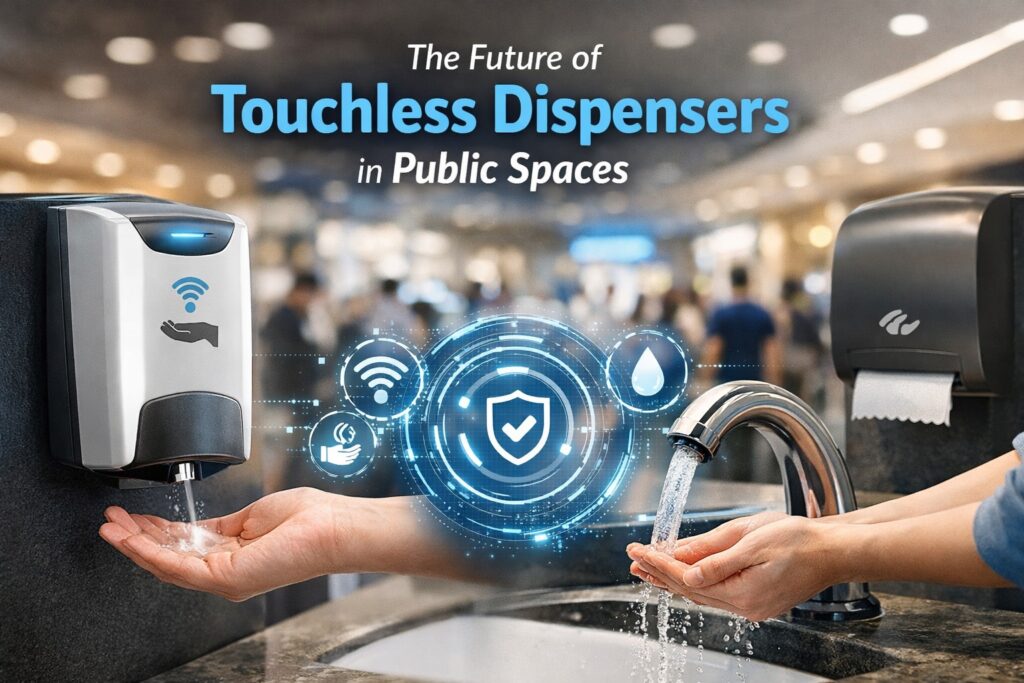
Touchless dispensers are changing how people interact with public spaces across the United States. From airports and hospitals to schools and shopping centers these systems reduce contact, improve hygiene and support a safer environment. As health awareness grows and technology improves, touchless dispensers are no longer optional upgrades. They are becoming a basic expectation.
This article explains where touchless dispensers are headed, why they matter and how businesses and public facilities can prepare for the next stage of adoption.
Why Touchless Dispensers Matter Today
Public spaces serve thousands of people every day. Any shared surface becomes a risk point for germs. Touchless dispensers remove that risk by eliminating direct contact.
Key reasons for their rapid adoption include
- Improved hygiene and reduced germ spread
- Faster and easier user experience
- Compliance with modern health guidelines
- Better public trust and perception
After recent global health events people expect visible safety measures. Touchless systems offer that reassurance in a clear and practical way.
How Touchless Dispenser Technology Is Evolving
Early touchless dispensers relied on simple motion sensors. Today the technology is far more advanced and reliable.
Modern systems now include
- Infrared and proximity sensors with higher accuracy
- Adjustable dispensing levels to reduce waste
- Battery efficiency improvements for long term use
- Integration with smart building systems
Future versions will likely connect to centralized monitoring dashboards allowing facility managers to track usage refill needs and maintenance schedules in real time.
Role of Touchless Dispensers in Different Public Spaces
Healthcare Facilities
Hospitals and clinics were among the first to adopt touchless dispensers widely. They help control infections and protect both staff and patients.
Benefits include
- Lower cross contamination risk
- Support for strict hygiene protocols
- Faster hand sanitation during emergencies
Airports and Transportation Hubs
High traffic locations demand fast and safe sanitation solutions. Touchless dispensers help maintain flow without creating bottlenecks.
Common placements include
- Security checkpoints
- Boarding gates
- Restrooms and lounges
Schools and Universities
Educational institutions now focus on preventive health measures. Touchless dispensers encourage regular hand hygiene among students.
Advantages for schools
- Easy use for all age groups
- Reduced maintenance compared to manual pumps
- Support for long term health education
Retail and Commercial Spaces
Shoppers feel more comfortable in clean environments. Touchless dispensers signal responsibility and care.
Retail benefits include
- Improved customer confidence
- Better brand perception
- Alignment with modern store design
Sustainability and Environmental Impact
The future of touchless dispensers also depends on sustainability. Manufacturers are focusing on reducing waste and environmental impact.
Key sustainability trends
- Refillable systems instead of single use units
- Precise dispensing to avoid overuse
- Durable materials with longer life cycles
Packaging also plays a role. Many brands now choose Custom Dispenser Boxes wholesale to reduce excess material while maintaining protection during transport.
Smart Integration and Data Driven Hygiene
One major shift is the move toward data driven hygiene management. Touchless dispensers will increasingly connect with building management systems.
Expected features include
- Usage tracking by location and time
- Automated refill alerts
- Performance diagnostics and maintenance alerts
This data helps organizations optimize placement reduce costs and ensure dispensers are always functional when needed.
Design and User Experience Improvements
Future touchless dispensers will focus not just on function but also on design.
Design trends include
- Minimalist and modern appearance
- Compact shapes for tight spaces
- Clear visual indicators for use and refill status
Packaging design also supports branding and clarity. Businesses often use custom printed packaging boxes to maintain consistent brand identity while clearly communicating product information.
Challenges in Adoption and How They Are Being Solved
Despite the benefits some challenges remain.
Common challenges
- Initial installation costs
- Sensor reliability in high light environments
- Battery replacement and maintenance
Solutions already in progress
- Lower manufacturing costs through scale
- Improved sensor calibration technology
- Energy efficient designs with longer battery life
As adoption grows these challenges are becoming easier to manage.
Market Growth and Industry Outlook
The touchless dispenser market in the United States is expected to continue strong growth. Public health awareness convenience and regulatory standards all support this trend.
Growth drivers include
- Expansion of smart buildings
- Increased public health funding
- Consumer preference for contact free solutions
Manufacturers that focus on reliability sustainability and user experience will lead the next phase of innovation.
Comparison Table Traditional vs Touchless Dispensers
| Feature | Traditional Dispensers | Touchless Dispensers |
| Contact required | Yes | No |
| Hygiene level | Moderate | High |
| User experience | Manual | Automatic |
| Waste control | Limited | Precise dispensing |
| Maintenance needs | Frequent | Optimized with alerts |
What the Future Looks Like
Touchless dispensers will soon become standard fixtures rather than optional upgrades. As technology improves they will blend seamlessly into public environments while delivering clear health benefits.
The future will likely include
- Fully connected hygiene systems
- Greater focus on sustainable materials
- Design driven solutions that match modern architecture
Public spaces that invest early will gain trust improve safety and meet rising expectations with confidence.
Final Thoughts
Touchless dispensers represent a smart response to modern public health needs. They reduce risk improve user experience and support cleaner environments across many sectors.
As innovation continues these systems will become more efficient more intelligent and more accessible. For public spaces across the United States the future of touchless dispensers is not just promising. It is essential.