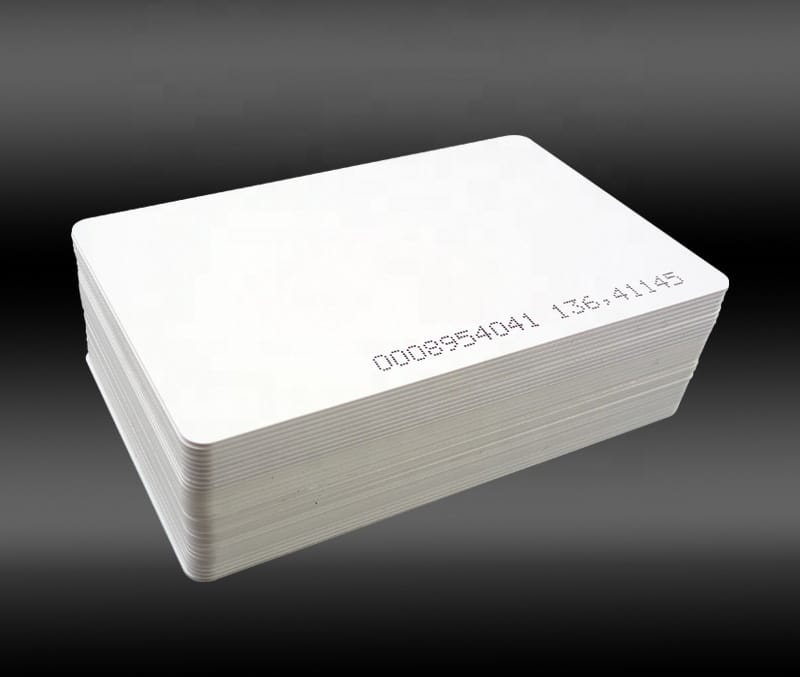
PVC RFID Blank Cards: The Foundation of Smart Identification Solutions
In today’s technology-driven world, smart identification systems have become essential for secure access, efficient management, and seamless operations across organizations. At the core of these systems are PVC RFID blank cards, which serve as the foundation for modern identification and access control solutions. Used in offices, schools, hospitals, hotels, and institutions, PVC RFID blank cards combine durability, flexibility, and advanced technology to support a wide range of applications.
What Are PVC RFID Blank Cards?
PVC RFID blank cards are plastic cards embedded with a Radio Frequency Identification (RFID) chip and antenna. These cards do not carry pre-printed information, allowing organizations to customize them according to specific needs. The RFID chip stores data that can be read wirelessly by compatible readers, enabling fast and contactless identification.
Made from high-quality PVC material, these cards are designed to match standard credit card size, ensuring compatibility with most card printers, access control systems, and card holders.
Why PVC RFID Blank Cards Are Essential
PVC RFID blank cards form the backbone of smart identification systems due to their versatility and efficiency. Unlike traditional ID cards, RFID cards allow contactless interaction, reducing wear and tear while improving convenience and hygiene. This makes them ideal for high-traffic environments.
These cards enhance security by enabling controlled access to buildings, rooms, or restricted areas. Each card can be uniquely encoded, making it difficult to duplicate or misuse. As a result, organizations gain better control over who can access specific locations or systems.
Key Applications of PVC RFID Blank Cards
PVC RFID blank cards are widely used in access control systems, allowing employees or students to enter authorized areas with a simple tap. They are also used for attendance tracking, eliminating manual processes and reducing errors.
In hospitality and healthcare, RFID cards serve as room keys, staff IDs, or patient identification tools. Educational institutions use them for library access, cashless payments, and campus security. Events and conferences rely on RFID cards for visitor management and entry tracking.
Benefits of Using PVC RFID Blank Cards
One of the primary advantages of PVC RFID blank cards is durability. PVC material resists bending, moisture, and daily wear, ensuring long-term use. The blank format allows full customization, including printing logos, photos, names, and encoding unique data.
These cards also improve operational efficiency. Contactless scanning speeds up entry, reduces queues, and enhances user experience. Additionally, RFID systems can be integrated with existing software, making them scalable and adaptable to organizational growth.
Types of PVC RFID Blank Cards
PVC RFID blank cards are available in different frequencies, such as low frequency (LF), high frequency (HF), and ultra-high frequency (UHF). Each type serves specific applications, from basic access control to long-range tracking.
Organizations can choose cards based on chip type, memory capacity, and compatibility with their RFID readers and systems. Selecting the right type ensures optimal performance and security.
Customization and Printing
One of the biggest advantages of PVC RFID blank cards is customization. Using ID card printers, organizations can print employee details, photographs, barcodes, or branding elements directly onto the card. Encoding the RFID chip allows personalized access rights and data storage.
Conclusion
PVC RFID blank cards are the foundation of smart identification solutions, offering a reliable, secure, and flexible platform for modern access and identification needs. Their durability, contactless functionality, and customization capabilities make them indispensable across industries. By investing in high-quality PVC RFID blank cards, organizations can build efficient identification systems that enhance security, streamline operations, and support future growth.