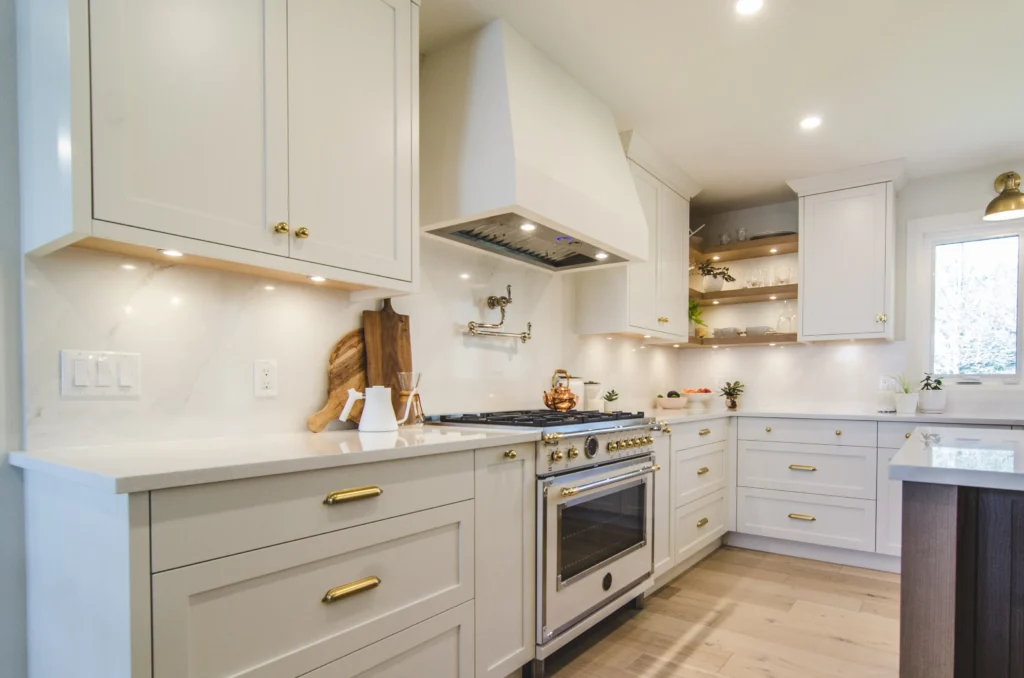
Kitchen under counter lights fix a problem most kitchens still have. Shadows on the prep zone. Dark corners by the coffee station. A backsplash that looks great in the daytime and flat at night.
So what actually works in real homes and real job sites?
Big-box stores push “good enough” kits. Smart-light brands push app features. Review sites usually rank what’s easy to ship. But homeowners and contractors often want the same thing: even light, simple install, and parts that don’t fail a year later. (That “dead strip in the middle” moment hurts.)
AQ Lighting sells the core styles people buy for this category: light bars, puck lights, and LED tape systems, plus low-profile panels and tunable options for different kitchens and budgets.
The 30-Second Match Test: Bar, Tape, Puck, or Panel?
Before brands, start with form factor. Most “best under cabinet lighting” lists group products this same way because it matches how people shop.
Light bars (linear fixtures)
Pick these when you want a tidy, finished look and fast coverage across a run of cabinets. Many contractors lean this way because bars mount cleanly and repeat well across projects. Lowe’s own buying guidance highlights bars as a common type for under-cabinet installs.
On AQ Lighting’s side, options include dimmable LED light bars and models with selectable color temperature (CCT), which helps match existing kitchen lighting.
LED tape systems (strip lighting)
Choose tape when you want continuous light with minimal fixture bulk. Tape also works well for corners, toe kicks, and uneven cabinet layouts. Under-cabinet guides often call out strip lights for flexibility and a sleek line of light.
AQ Lighting offers plug-and-light tape kits, pre-cut strips, and full spools for longer runs. That range matters because “one kit fits all” rarely fits anything.
Puck lights
Pucks create pools of light. They suit glass-front cabinets, display zones, or when you want “spotlight” control instead of a continuous line. Major retailers list puck lights as a core category alongside bars and strips.
AQ Lighting’s under-cabinet collection includes puck styles and multi-pack configurations.
Ultra-thin panels
Panels suit modern kitchens where you want a low-profile fixture with broad light spread. AQ Lighting carries ultra-thin, dimmable under-cabinet panels for that clean look.
If you only remember one rule, use this:
For the most even countertop light, bars or tape usually win. For accents, pucks win. For minimalist design, panels win.
What Competitors Get Right, and Where Buyers Get Stuck
Home Depot and Lowe’s win on convenience. You can grab a kit today, and they stock many mainstream options across bars, tape, and puck styles.
Smart-light brands win when you want app control, scenes, and integrations. Review sites often rank these highly because features read well in a bullet list.
But buyers still hit the same friction points:
1) “It looks bright online… but it feels dim on my counter.”
Many shoppers consider watts and ignore lumens. Several lighting guides peg basic task lighting around 175–225 lumens per linear foot for standard counters, with higher needs for deeper counters or brighter task zones.
So if someone installs a short, low-output kit, shadows stay.
2) “The light color doesn’t match my ceiling lights.”
Mixed color temperatures make kitchens look off. Tunable or selectable CCT fixtures reduce that risk. That’s why selectable CCT shows up across many retail listings and product lines.
3) “The install took longer than it should.”
Contractors care about repeatable installs. Homeowners care about not cutting holes they regret. The market keeps offering three main routes: hardwired, plug-in, and low-voltage systems with drivers. Under-cabinet guides and service providers explain this tradeoff in plain terms.
This is where AQ Lighting tends to fit well. They focus on the practical categories people already search for, like LED light bars, under-cabinet tape systems, and puck kits, with pricing positioned to compete in a crowded space.
If you’re shopping for kitchen under counter lights right now, ask yourself this:
Do you want a quick fix, or do you want a setup you won’t think about again?
A Simple Buying Checklist That Works for Homeowners and Contractors
Most search-intent titles around this keyword boil down to: best under cabinet lighting, how to install, hardwired vs plug-in, and how many lumens.
Use this checklist to pick faster.
Choose brightness with a real target
- For common kitchen task lighting, aim around 175–225 lumens per linear foot as a starting point.
- If you prep a lot at night, push higher. If the lights serve mostly as ambiance, you can go lower.
Pick a color temperature you can live with
- Warm white often feels cozy. Neutral white reads clean.
- If you don’t want to guess, pick a selectable CCT bar or puck set so you can match existing lighting.
Decide on power and install style before you fall in love with a fixture
- Plug-in works well for DIY installs and rentals.
- Hardwired fits remodels and new builds, and it keeps the look tidy.
- Low voltage tape systems can give clean lines, but plan for drivers and wire routing.
Match product type to the cabinet run
- Long, straight runs: LED light bars or tape kits.
- Short sections or feature zones: puck lights.
- Modern slab cabinets: ultra-thin panels.
For contractors: reduce call-backs
Pick fixtures with dimming support, consistent output, and options for different cabinet layouts. AQ Lighting’s under-cabinet lineup includes dimmable bars, tape systems, and puck configurations that help standardize installs across projects.
They also position themselves around responsive service and straightforward policies, which matters when a client wants a swap fast.
Use kitchen under counter lights as task lighting first. Then let them support the look of the room. When you flip them on, your countertop should feel “ready to work.”
And if you want a clean path from selection to delivery, AQ Lighting keeps the shopping focused on the formats people actually install in kitchens: bars, tape systems, pucks, and panels.
FAQs: Kitchen Under Counter Lights
What type of under-cabinet light works best in a kitchen?
Most kitchens do well with LED strip/tape lights or light bars for even task lighting. Puck lights work best for accents or short zones.
How many lumens should under-cabinet lights have?
A common starting point for task lighting is about 175–225 lumens per linear foot for standard counters. Adjust upward for deeper counters or brighter work zones.
Is plug-in or hardwired under-cabinet lighting better?
Plug-in installs faster and suits DIY setups. Hardwired looks cleaner and fits remodels or new builds, especially when you want hidden cords.
What color temperature should under-cabinet lighting be?
Choose a color temperature that matches nearby fixtures. If you feel unsure, pick a selectable CCT option so you can set the tone after installation.
Do under-cabinet lights save energy?
LED under-cabinet lighting targets the work surface, so you can often use less overall lighting for the same tasks. Many buying guides recommend LEDs for efficiency and longevity