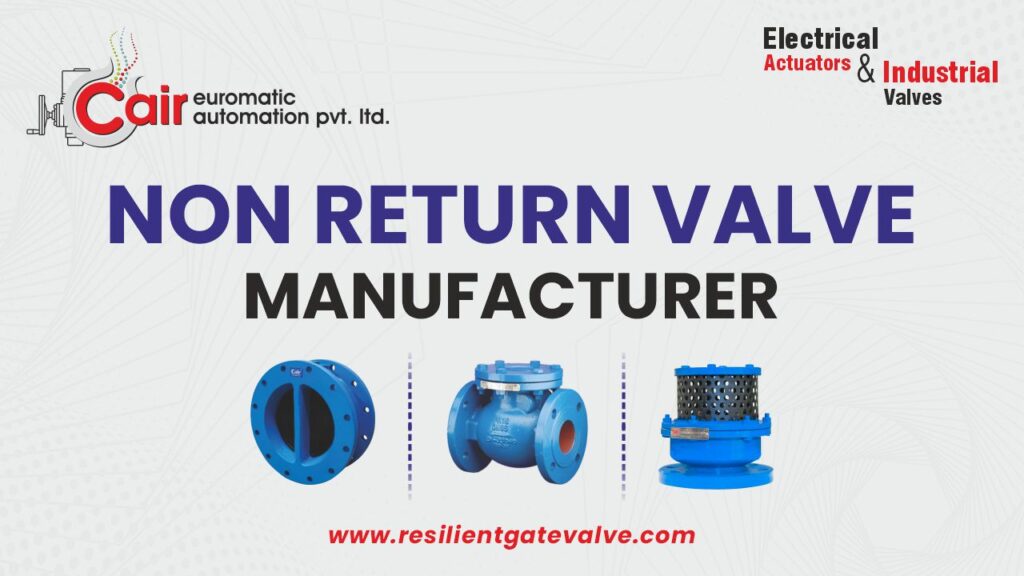
In any water supply system, maintaining smooth and safe water flow is very important. One small but critical component that helps achieve this is the Non Return Valve (NRV). As the name suggests, a non return valve allows water to flow in only one direction and prevents it from flowing backward. This simple function plays a major role in protecting pipelines, pumps, and the overall water system.
Let’s understand how a non return valve works and why it is so important in water supply applications.
What Is a Non Return Valve?
A Non Return Valve, also known as a check valve, is a mechanical valve designed to permit flow in one direction only. When water moves in the correct direction, the valve opens automatically. If the water tries to reverse its direction, the valve closes immediately, stopping backflow.
In water supply systems, non return valves are commonly installed near pumps, storage tanks, pipelines, and distribution lines to ensure safe and uninterrupted operation.
Basic Working Principle of a Non Return Valve
The working of a non return valve is very simple and fully automatic. It does not require electricity, air pressure, or manual operation.
Forward Flow (Valve Opens)
When water flows in the intended direction:
- Water pressure pushes against the valve disc, flap, or piston
- The internal mechanism lifts or moves aside
- The valve opens and allows water to pass smoothly
During normal operation, the valve stays open as long as water flows forward with sufficient pressure.
Reverse Flow (Valve Closes)
When water flow slows down, stops, or tries to move backward:
- Reverse pressure pushes the valve disc back into its seat
- The valve closes instantly
- Backflow is completely blocked
This automatic closing action protects the system from damage and contamination.
Why Non Return Valves Are Important in Water Supply
In water supply systems, backflow can cause serious problems if not controlled properly. A non return valve prevents these issues by ensuring one-way flow.
Prevents Pump Damage
When pumps stop suddenly, water can flow backward, causing pressure surges or water hammer. A non return valve stops reverse flow and protects pumps from mechanical damage.
Avoids Water Contamination
Backflow can mix clean water with dirty or contaminated water from other sections of the system. NRVs help maintain water quality by preventing reverse contamination.
Maintains System Pressure
By blocking reverse flow, non return valves help maintain consistent pressure in pipelines and distribution networks.
Improves System Efficiency
With controlled flow direction, the water supply system works smoothly, reducing energy loss and maintenance requirements.
Types of Non Return Valves Used in Water Supply
Different water systems require different NRV designs. Some commonly used types include:
Swing Type Non Return Valve
This valve uses a hinged disc that swings open with forward flow and closes when flow reverses. It is widely used in water pipelines due to its simple design and low pressure loss.
Lift Type Non Return Valve
In this design, a disc lifts vertically to allow flow and drops back to block reverse flow. It is suitable for systems where pressure control is important.
Dual Plate or Wafer Type NRV
This compact design uses two spring-loaded plates. It closes quickly, reducing water hammer and is often used in modern water supply systems.
Where Non Return Valves Are Installed in Water Supply Systems
Non return valves are installed at strategic locations to ensure system safety and reliability, such as:
- Near water pumps
- At pipeline junctions
- In water treatment plants
- At overhead or underground storage tanks
- In municipal water distribution networks
Proper placement ensures maximum protection and efficient water flow.
Common Problems Without a Non Return Valve
If a water supply system operates without a non return valve, several issues may occur:
- Backflow leading to pipe damage
- Pump failure due to reverse rotation
- Water contamination
- Pressure fluctuations
- Increased maintenance and repair costs
Installing a quality non return valve helps avoid these problems and improves system lifespan.
Conclusion
A non return valve may seem like a small component, but its role in a water supply system is extremely important. By allowing water to flow in only one direction, it protects pumps, maintains pressure, prevents contamination, and ensures smooth system operation.
Understanding how a non return valve manufactuer works helps engineers, contractors, and users make better decisions when designing or maintaining water supply systems. Choosing the right type of NRV and installing it correctly ensures reliable performance and long-term safety.