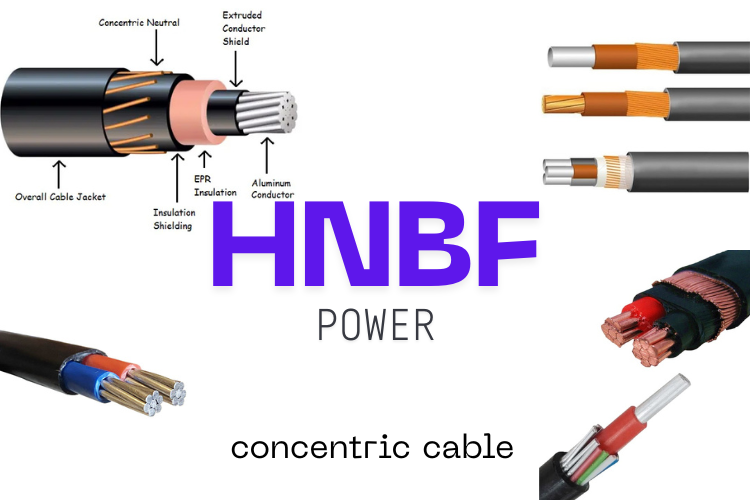
In modern power distribution systems, reliability, safety, and efficiency are non-negotiable. Utilities, EPC contractors, and industrial buyers increasingly rely on concentric cable solutions to ensure stable low-voltage and medium-voltage power delivery in residential, commercial, and utility applications. Designed with a central conductor surrounded by concentric neutral wires, concentric cables offer enhanced fault protection, mechanical strength, and long-term performance.
As a global manufacturer of overhead conductors and power cables, HNBF Power supplies high-quality concentric cables engineered to meet international standards and demanding grid conditions. This guide explains what concentric cables are, how they work, and why they are a preferred choice for modern power distribution projects.
What Is a Concentric Cable?
A concentric cable is a power cable in which the phase conductor is placed at the center, surrounded by one or more layers of neutral or grounding conductors arranged concentrically around it. These neutral conductors are typically made of aluminum or copper wires and are evenly distributed for electrical balance.
Concentric cables are commonly used in:
- Low-voltage underground distribution networks
- Service entrance connections
- Residential and commercial power supply systems
- Utility distribution where grounding reliability is critical
This construction provides both current-carrying capability and an integrated neutral or earth return path.
Key Construction Features of Concentric Cable
Central Phase Conductor
The core conductor is usually aluminum or copper, designed to carry the main electrical load efficiently.
Insulation Layer
High-quality insulation materials protect the conductor and ensure electrical safety under varying voltage and temperature conditions.
Concentric Neutral Wires
Multiple neutral wires are helically wrapped around the insulation. These act as:
- Neutral conductors
- Fault current paths
- Grounding protection
Outer Sheath
An outer jacket provides mechanical protection, moisture resistance, and durability for underground or exposed installations.
Advantages of Using Concentric Cable in Power Distribution
Improved Safety and Fault Protection
The concentric neutral layer ensures a reliable return path for fault currents, reducing the risk of electrical hazards and improving system protection.
Balanced Electrical Performance
Even distribution of neutral wires helps minimize electromagnetic interference and voltage imbalance.
Mechanical Strength and Durability
The concentric design enhances resistance to external stress, making the cable suitable for underground and harsh environments.
Simplified Installation
With integrated neutral and grounding conductors, concentric cables reduce the need for separate grounding systems, saving installation time and cost.
Long Service Life
When manufactured with quality materials and strict process control, concentric cables offer excellent longevity and low maintenance requirements.
Typical Applications of Concentric Cable
Concentric cables are widely used across utility and industrial sectors, including:
- Underground low-voltage distribution networks
- Residential service drops and meter connections
- Commercial buildings and infrastructure projects
- Utility grid upgrades and urban power networks
Utilities prefer concentric cables where safety, space efficiency, and grounding reliability are essential.
Concentric Cable vs. Standard Power Cable
Compared to standard single-core or multi-core power cables, concentric cables provide:
- Integrated neutral and grounding functionality
- Better fault current handling
- Enhanced safety compliance for utility standards
For distribution systems requiring dependable neutral performance, concentric cables are often the more practical and compliant solution.
Why Choose HNBF Power for Concentric Cables?
HNBF Power is a trusted global supplier of overhead conductors and power cables, including AAC, AAAC, ACSR, ABC, LV power cables, and concentric cables. Our concentric cable solutions are manufactured with a strong focus on quality, performance, and compliance.
Key advantages of sourcing from HNBF Power include:
- Consistent manufacturing quality and material control
- Customizable conductor sizes and constructions
- Compliance with international utility and grid standards
- Technical support for engineers and procurement teams
- Reliable supply for large-scale utility and EPC projects
Our experience in power transmission and distribution ensures that every concentric cable delivers dependable performance throughout its service life.
Frequently Asked Questions (FAQs)
1. What is the main purpose of a concentric cable?
The main purpose of a concentric cable is to provide safe and reliable power distribution with an integrated neutral and grounding system, improving fault protection and electrical balance.
2. Are concentric cables suitable for underground installation?
Yes, concentric cables are widely used for underground distribution due to their mechanical strength, insulation reliability, and integrated neutral conductors.
3. What materials are used in concentric cable construction?
Concentric cables typically use aluminum or copper for the phase conductor and neutral wires, along with high-grade insulation and protective outer sheathing.
4. How does a concentric cable improve safety?
The concentric neutral wires provide a continuous and reliable path for fault currents, reducing shock risk and enhancing system protection.
5. Can HNBF Power supply customized concentric cables?
Yes, HNBF Power offers customized concentric cable solutions based on conductor size, application requirements, and project specifications.
Conclusion
Concentric cable plays a critical role in modern power distribution by combining efficiency, safety, and durability in a single integrated design. For utilities, engineers, and procurement professionals, selecting the right concentric cable supplier is essential for long-term system reliability.
HNBF Power delivers high-quality concentric cables backed by global manufacturing expertise and a deep understanding of power transmission and distribution needs.