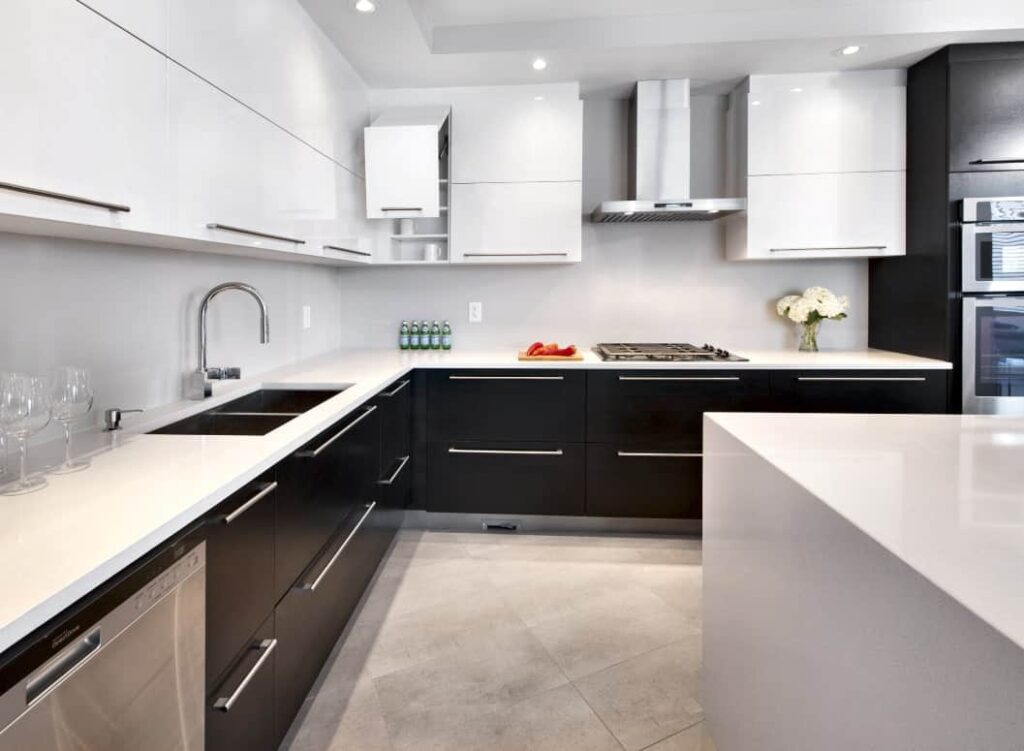
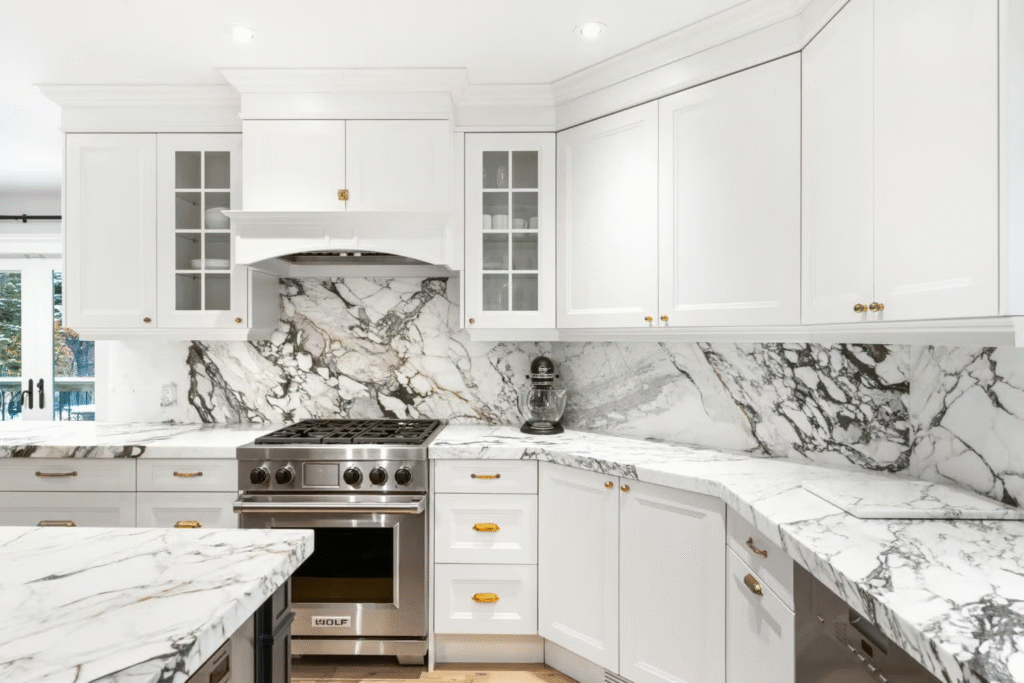
I’ve specified and maintained marble in homes, restaurants, and hotels. The happiest owners all have the same mindset: they protect marble where the action is, and let it be beautiful where it can breathe.
This guide breaks down what to buy, where to use it, what it costs, and the simple habits that keep it looking great. If you’re collecting marble kitchen ideas, planning a marble kitchen design, or worried about marble kitchen maintenance, start here.
1. Marble Kitchen at a Glance (Quick Answers)
Is marble good for kitchens?
Yes—especially for islands, baking zones, and backsplashes. It’s less ideal for nonstop, high-acid prep unless you’re okay with visible wear.
Does marble stain/etch?
Both can happen. Etching is a dull mark from acids reacting with calcium carbonate in the stone.
Stains are absorption-based (oil, wine, coffee) and depend on porosity and time.
Is it high-maintenance?
It’s more “high-attention” than hard. Seal it, clean gently, and wipe acidic spills fast. Natural Stone Institute notes sealers don’t make stone stain-proof; they make it more stain resistant.
How long does it last?
Decades. The surface may change, but the material is durable when installed well and cared for.
Best marble colors for kitchens
White (bright), cream/beige (warm), gray (modern), green (bold), black (dramatic).
2. Why Homeowners Love a Marble Kitchen
A Marble Kitchen looks premium because marble reflects light and adds depth. The veining is also unique—no two slabs match, so your space doesn’t feel “catalog.”
Resale is mixed. In high-end markets, marble can signal quality. In practical, family-heavy markets, some buyers prefer low-maintenance surfaces. The safest resale play I see is: marble as a statement (island/backsplash) and something tougher on perimeter runs.
3. The Real Downsides (So You Don’t Get Surprised)
Etching (what it is)
Etching is a chemical reaction from acids (lemon, vinegar, wine, tomato). It can happen quickly, even with a sealer.
Stains vs. etches
Most people confuse them:
- Etch: surface dulling (a finish problem)
- Stain: color change from absorption (a cleaning/poultice problem)
“Stain remover” won’t fix etching; polishing usually does.
Scratches, chips, and patina
Marble is softer than many alternatives, so scratches and small edge chips are normal. Some owners love the softened look; others feel anxious. Be honest about which camp you’re in.
Busy family kitchens
If kids snack on citrus at the island or someone cooks with a lot of acids, your counters will show it. The workaround is smart zoning: a dedicated prep area with boards and mats.
4. Best Places to Use Marble in a Kitchen
In a Marble Kitchen, placement is everything.
Countertops
Best for: islands, baking, light-to-moderate cooking.
Not best for: heavy “all-day” prep zones unless you accept patina.
Backsplash (often the sweet spot)
You get the look with less direct abuse, and designers are leaning into boldly veined slab backsplashes for 2026.
Waterfall island
If you want one big marble moment, this is it. Plan supports for overhangs and protect the edges near seating.
Floors
Polished floors can be slippery; honed is safer. Expect sealing and periodic refreshes in restaurants/hotels.
Accents
Shelves, window ledges, and bar fronts add marble without countertop-level stress.
5. Most Popular Marble Kitchen Styles (Quick Formulas)
- Classic white marble kitchen: white cabinets + brass + warm wood.
- Modern marble kitchen: flat panels + calmer veining + matte black.
- Warm marble kitchen: cream marble + greige cabinets + textured neutrals.
- Dark & moody marble kitchen: dramatic veining + walnut + statement lighting.
6. Marble Color & Vein Guide
White
Clean, bright, and versatile. Add warmth with wood or brass.
Cream/beige
A softer look that feels welcoming in homes and hospitality spaces.
Gray
Balanced and modern; pairs well with white, oak, or charcoal.
Green (trending)
Green tones are showing up more in 2026 kitchens—both in cabinets and stone moments, as highlighted by Livingetc and Architectural Digest coverage.
Black
High contrast and high drama; also more likely to show dust and water marks.
Quick pairing chart
- White marble → cabinets: white/taupe/soft gray | hardware: brass/nickel/black
- Cream marble → cabinets: greige/warm white | hardware: brass/bronze
- Gray marble → cabinets: white/charcoal/oak | hardware: nickel/black
- Green marble → cabinets: warm white/walnut | hardware: brass/aged bronze
- Black marble → cabinets: warm white/oak/black | hardware: brass/black
7. Marble Finish Options: Polished vs. Honed vs. Leathered
- Polished: glossy and bright, but etches show as dull spots.
- Honed: matte and more forgiving; this is what I recommend most for real-life use.
- Leathered: textured sheen (availability varies); can disguise small marks.
8. Marble Countertops: Costs, Thickness, and What Drives Price
A practical U.S. range for marble slabs is about $40–$100 per sq ft (material), with many projects clustering around ~$60 per sq ft, before fabrication/installation, per HomeAdvisor.
What changes the number:
- Rarity/brand of the stone
- Slab size (big islands cost more)
- Edge profiles and cutouts
- Seams (layout and waste)
Thickness: 2 cm (often supported) vs 3 cm (heavier, “luxury” edge). Overhangs and waterfalls may need hidden supports.
Budget tips that keep the look
Use marble on the island + a tougher material on perimeters, choose a simple edge, and plan your slab layout early to reduce seams.
9. Marble Alternatives That Still Look High-End
If you love the vibe but want less worry than a Marble Kitchen countertop, these are the usual winners:
- Quartz (marble-look): non-porous, no sealing, easy care; watch heat because of resin content.
- Porcelain slabs: non-porous, very stain resistant, and notably heat resistant; gaining popularity in renovations.
- Quartzite: natural stone, often harder than marble; still varies by slab.
- Granite / soapstone: granite is tough; soapstone is softer but less reactive to acids and develops a patina.
10. How to Protect a Marble Kitchen (Practical Routine)
A Marble Kitchen stays “photo-ready” with small habits, not constant polishing.
Sealing
Think of sealers as repellents: they slow absorption and buy time, but they don’t stop etching.
Daily cleaning
- Use pH-neutral stone cleaner or mild soap + water.
- Use a soft microfiber cloth.
- Avoid vinegar, lemon-based cleaners, and abrasives, consistent with Architectural Digest care guidance.
Wipe these immediately
Citrus, vinegar, wine, coffee, tomato sauce.
Protective tools that still look good
A large cutting board that lives on the counter, slim trivets, and a subtle sink mat to stop grit scratches.
11. Removing Stains & Handling Etches (Quick Fix Guide)
Stains
Oil-based and organic stains often need the right poultice and patience. If the stain is big, old, or recurring, call a stone restoration pro.
Etches
Etching is surface damage. You don’t “pull it out”—you polish it out. The Marble Institute of America care sheet also flags acids as a key risk and recommends coasters/trivets as daily protection.
12. Marble Kitchen FAQ (for featured snippets)
Is marble okay around the stove?
Yes, but wipe splatters quickly and use trivets for hot cookware.
Best marble for countertops?
Choose based on finish, slab quality, and how you cook—not just the name.
Honed or polished in a kitchen?
Honed is usually the most forgiving.
How often to reseal?
Many homes reseal about yearly, but use the water-drop test to decide.
Can you put hot pans on marble?
I don’t recommend it—trivets are an easy habit that prevents cracks and dull spots.
5 Extra FAQs for Google’s AI Overview / People Also Ask
- Will a Marble Kitchen always look “marked up”?
Not always, but it will develop patina. Honed finishes make this feel intentional. - What’s the easiest daily routine for Marble Kitchen maintenance?
Wipe with a microfiber cloth and a pH-neutral cleaner; avoid acidic sprays. - Is marble sanitary for food prep?
Yes when cleaned properly. It’s common in pastry areas; just keep it clean and dry. - What’s the lowest-maintenance way to get the marble look?
Porcelain or quartz with marble-style veining. - Is a Marble Kitchen a smart choice for restaurants/hotels?
Often yes on backsplashes and feature surfaces; for heavy prep counters, many operators choose porcelain or quartz for durability.