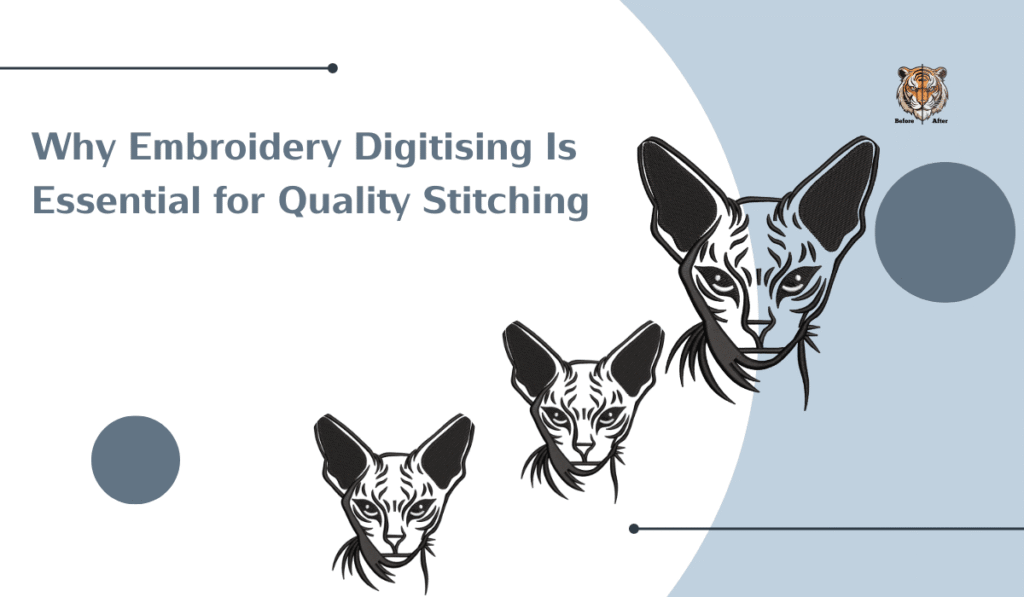
Quality stitching in machine embroidery depends on more than good machines and threads. The real foundation lies in embroidery digitising, where artwork is transformed into precise stitch instructions that guide the embroidery machine. When digitising is done correctly, stitches form clean shapes, maintain consistency, and perform well on fabric. Poor digitising, however, leads to visible defects that no machine can fix later.
For commercial embroidery, quality stitching is not optional. It directly affects brand image, garment durability, and production efficiency. This is why embroidery digitising plays such an important role in professional embroidery work.
Stitch Accuracy Starts with Digitising
Embroidery machines stitch exactly what they are told. They do not interpret images or logos visually. Every stitch position, direction, and length is controlled by the digitised file.
Proper embroidery digitising ensures:
- Accurate stitch placement
- Smooth stitch flow
- Balanced stitch angles
- Controlled stitch movement
Accurate digitising is the first step toward clean and professional stitching.
Controlling Fabric Movement During Stitching
Fabric reacts to stitching pressure. If digitising does not account for fabric behavior, designs can shift, stretch, or pucker.
Professional digitising manages fabric movement by:
- Adjusting stitch direction
- Using proper underlay stitches
- Applying correct stitch density
- Compensating for fabric pull
These adjustments help maintain shape and alignment during stitching.
Stitch Density and Thread Control
One of the most common causes of poor stitching is incorrect stitch density. Too many stitches create stiffness and thread breaks, while too few stitches cause gaps and weak coverage.
Quality embroidery digitising balances density to:
- Maintain smooth coverage
- Reduce thread stress
- Prevent needle damage
- Improve stitch durability
This balance results in stable and long-lasting embroidery.
Clean Edges and Shape Definition
Sharp edges and clear shapes are signs of quality stitching. Poor digitising often causes uneven outlines, overlapping stitches, or distorted shapes.
Proper digitising delivers:
- Clean borders
- Consistent spacing
- Smooth curves
- Accurate design proportions
This clarity is especially important for logos and text embroidery.
mportance of Underlay in Stitch Quality
Underlay stitches form the base of embroidery. They stabilize fabric and support top stitches, even though they are usually hidden.
Quality underlay:
- Holds fabric firmly
- Improves stitch coverage
- Reduces distortion
- Enhances durability
Without proper underlay, even well-planned stitches can fail.
Consistency Across Multiple Garments
In commercial embroidery, designs must look the same across all garments in an order. Inconsistent stitching often points to weak digitising.
Professional embroidery digitising supports:
- Uniform stitch appearance
- Repeatable production results
- Reliable output across machines
- Reduced variation in bulk orders
Consistency protects both quality and reputation.
Handling Small Text and Fine Details
Small lettering and fine details are sensitive to digitising errors. Incorrect stitch choices can make text unreadable.
Experienced digitising ensures:
- Proper spacing in small text
- Adjusted stitch types for clarity
- Reduced thread buildup
- Clear readability after stitching
This is critical for professional branding.
Reducing Production Problems
Many embroidery issues originate at the digitising stage. Poor digitising leads to machine stoppages and wasted materials.
Quality digitising helps reduce:
- Thread breaks
- Fabric puckering
- Misaligned designs
- Excessive trimming
Fewer production problems mean smoother workflows and lower costs.
Manual Digitising Ensures Better Stitch Quality
Automated digitising tools often ignore fabric behavior and embroidery mechanics. Manual digitising allows experienced decisions that improve stitching quality.
Manual digitising provides:
- Design-specific planning
- Fabric-based adjustments
- Better stitch control
- Higher reliability
This approach is preferred for professional embroidery.
Quality Control Before Production
Professional digitising includes reviewing stitch paths and testing design behavior before production.
Quality checks involve:
- Stitch sequence inspection
- Density and underlay review
- Fabric compatibility checks
- Error correction before stitching
This prevents costly mistakes during embroidery runs.
Conclusion
Quality stitching in machine embroidery begins with proper planning, and that planning happens during embroidery digitising. From stitch accuracy and fabric control to durability and consistency, every aspect of embroidery quality depends on how well a design is digitised. Investing in professional digitising helps businesses achieve reliable results, reduce errors, and maintain high stitching standards across all embroidery projects
FAQs
Why is embroidery digitising important for stitch quality?
Digitising controls stitch placement, density, and direction, which directly affect embroidery results.
Can good machines fix poor digitising?
No. Machines only follow instructions and cannot correct digitising mistakes.
How does digitising affect fabric behavior?
Proper digitising manages fabric movement through stitch direction, underlay, and density control.
Is digitising important for small text embroidery?
Yes. Small text requires precise stitch planning to remain readable.
Is manual digitising better than auto digitising?
Yes. Manual digitising provides better control and higher stitching quality.