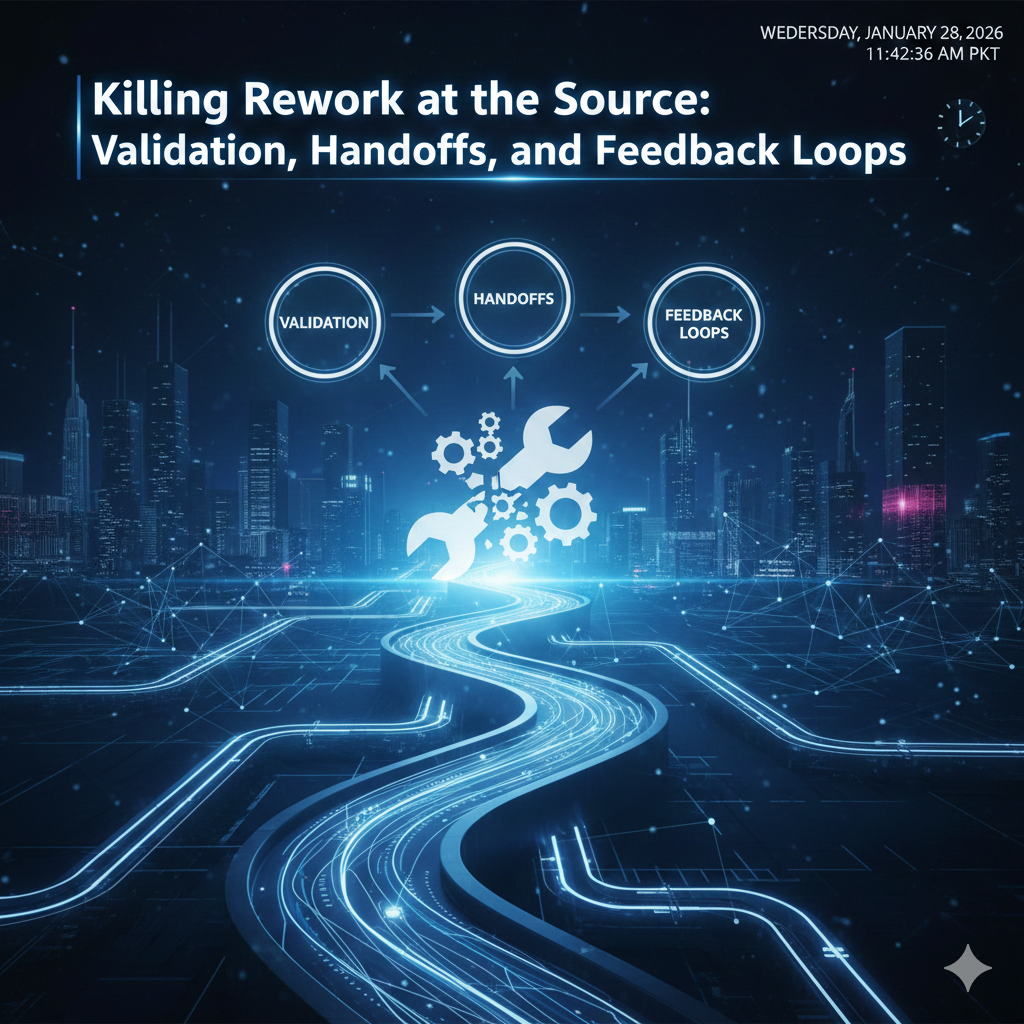
In any business, rework is a silent productivity killer. It eats up time, drains resources, and creates unnecessary stress. Whether it’s fixing errors in documents, reprocessing approvals, or chasing after missing data, rework often feels like a never-ending cycle. Digital Process Automation (DPA) provides the solution by eliminating these repetitive tasks at the source, allowing businesses to streamline processes, enhance efficiency, and drastically reduce the chance of errors.
The Hidden Cost of Rework
Rework happens when tasks are repeated due to mistakes, miscommunication, or misinterpretation. In the context of business processes, rework often arises when data is incorrect, approvals are delayed, or documents are sent to the wrong person. According to a report from McKinsey, businesses can lose up to 30% of their productivity due to inefficiencies in work processes, much of which is caused by rework.
Rework is costly in terms of both time and money. Tasks that should take minutes can drag on for hours as team members go back and forth correcting mistakes. These inefficiencies create delays and lead to missed deadlines, which can negatively impact client relationships and brand reputation.
Digital Process Automation addresses this problem by automating workflows and applying validation checks throughout the process. It reduces the need for constant corrections and ensures that tasks are completed accurately the first time.
How Digital Process Automation Prevents Rework
DPA works by automating processes and setting up key checkpoints in workflows to ensure that errors are identified and corrected before they can cause delays or require rework. This is done through a combination of validation, streamlined handoffs, and continuous feedback loops.
1. Validation: Catching Mistakes Early
One of the most powerful ways DPA prevents rework is through validation checks at every stage of the workflow. Rather than waiting until the end of a task or process to find mistakes, DPA applies business rules to ensure that data and processes are accurate from the beginning.
For instance, when an invoice is entered into a system, DPA can automatically check for common errors such as missing fields, mismatched totals, or incorrect dates. If the system detects any issues, it flags them immediately, so the responsible team member can correct them before the task is sent forward in the workflow.
This early-stage validation not only saves time but also reduces the number of errors that would otherwise require time-consuming rework. Instead of waiting for manual reviews or approvals, the system ensures that only correct data moves forward, preventing issues from compounding down the line.
2. Streamlined Handoffs: Moving Tasks to the Right People at the Right Time
Handoffs where one team or individual passes a task to another are often a point of failure. Miscommunication, incomplete data, and unclear responsibilities can all contribute to errors during handoffs. In a traditional process, documents or tasks may be passed along through email, phone calls, or face-to-face meetings, leaving room for confusion and mistakes.
Digital Process Automation fixes this by automating the routing of tasks to the right individuals or departments based on predefined rules. When a document is completed or a task is ready for review, DPA ensures that it is automatically forwarded to the correct person with all the necessary information, eliminating the risk of miscommunication or missed steps.
For example, an invoice may need to go through several stages: from the accounts payable team to the finance department for approval and then to a supervisor for final sign-off. With DPA, the system can track each stage, automatically forwarding the document to the correct person at the right time and ensuring that no steps are skipped. This automated handoff process removes the risk of lost documents and redundant communication, ensuring smooth transitions and a faster overall workflow.
3. Feedback Loops: Continuous Improvement and Error Prevention
Feedback loops are a critical part of the DPA process. They provide a mechanism for continuous improvement by collecting data on the performance of workflows and identifying areas where errors or inefficiencies occur. Feedback loops allow businesses to make adjustments in real-time and prevent the recurrence of issues that cause rework.
For instance, after a document is processed, the system can collect data on whether any validation errors were flagged and what caused them. If a specific error keeps occurring, the system can suggest adjustments to the workflow, such as refining validation rules or adjusting how documents are routed. By identifying and addressing bottlenecks or recurring issues, businesses can reduce the likelihood of mistakes and improve overall process efficiency.
Moreover, feedback loops can be used to train and improve the system over time. As the system encounters more documents or data points, it learns from past mistakes, which results in more accurate and efficient workflows as time progresses. This learning mechanism significantly reduces the chance of human errors slipping through the cracks.
The Benefits of Eliminating Rework with Digital Process Automation
1. Increased Efficiency
By automating routine tasks, validating data early, and streamlining handoffs, DPA ensures that work is completed without delays or interruptions. With fewer errors to correct, teams can focus on higher-value tasks and make quicker decisions.
2. Improved Accuracy
Validation checks at every step ensure that data is accurate and complete before it moves to the next stage. This dramatically reduces errors, making processes more reliable and minimizing the need for corrections down the line.
3. Faster Processing Times
The speed of workflows increases when tasks are validated, routed, and reviewed automatically. Employees no longer need to spend time chasing down information or reviewing documents manually, which results in faster processing times and quicker turnarounds.
4. Cost Savings
Reducing the need for rework not only saves time but also reduces the cost associated with correcting mistakes. Businesses can save on labor costs, avoid penalties for missed deadlines, and improve operational efficiency across the board.
Conclusion
Rework is a silent productivity killer that can hinder an organization’s growth and increase operational costs. By integrating Digital Process Automation into workflows, businesses can eliminate rework at the source through automated validation, streamlined handoffs, and feedback loops. These tools ensure that tasks are completed accurately the first time, improving efficiency, reducing errors, and speeding up decision-making.
The next step is simple: assess your workflows to identify areas where rework occurs, then introduce automation to catch errors early and streamline handoffs. By leveraging DPA, businesses can build more reliable, predictable, and efficient processes that deliver lasting results.