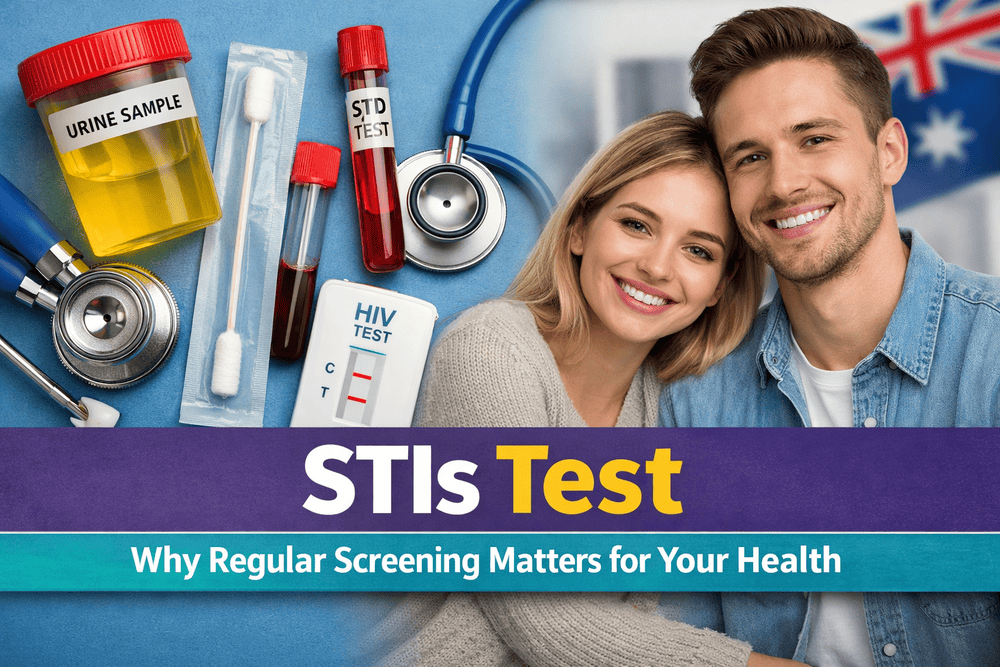
Sexually transmissible infections (STIs) are common in Australia and can affect anyone who’s sexually active regardless of age, gender, or sexual orientation. Understanding the importance of an STIs test and committing to regular screening is a vital part of safeguarding your health and wellbeing. Early detection not only protects you but also helps reduce the spread of infections across the community.
In this guide, we explain what STIs are, how screening works, why it matters, and how often you should book an STI check based on trusted Australian health guidance.
What Are STIs TEST and Who Is at Risk?
Sexually transmissible infections (STIs), also known as sexually transmitted infections, are infections spread mainly through vaginal, anal, or oral sex. They may be caused by bacteria, viruses, fungi, or parasites. Common STIs in Australia include chlamydia, gonorrhoea, syphilis, genital herpes, hepatitis B, and HIV.
STIs can pass from one partner to another often without any noticeable symptoms which is precisely why regular screening is crucial. Even without symptoms, infections can still cause serious health issues if left untreated, including long-term reproductive health problems and increased vulnerability to other infections.
Who Should Consider Testing?
Everyone who is sexually active should think about getting regular STI screening, especially if you:
- Are sexually active with a new partner
- Have multiple sexual partners
- Have had unprotected sex or suspected exposure
- Are pregnant or planning pregnancy
- Have had a previous STI diagnosis
- Belong to a priority group (e.g. men who have sex with men, Aboriginal and Torres Strait Islander people, or people who inject drugs)
Talking openly with your healthcare provider whether at a clinic or through services like HelloGP can help determine what testing schedule is most appropriate for you.
How Does an STIs Test Work?
An STIs test is a screening process used to detect infections before they cause symptoms or complications. Testing is straightforward, safe, and usually quick.
What Happens During an STIs Test?
The type of sample collected depends on the infection being screened for and your personal situation:
- Urine sample commonly used to screen for chlamydia and gonorrhoea.
- Blood test used for infections like HIV, syphilis, and hepatitis.
- Swab tests throat, anal, or genital swabs may be used depending on sexual practices and symptoms.
You can usually collect certain swabs yourself if comfortable, or a clinician can assist you. These tests are typically confidential and can be arranged through your GP, sexual health clinic, community health service, or Aboriginal Community Controlled Health Organisation.
Cost of an STIs Test in Australia
If you have a Medicare card, STI testing is generally free or bulk-billed meaning no out-of-pocket cost for the pathology. You might only cover the consultation cost with a GP if it isn’t bulk-billed. Free services are commonly available through sexual health clinics, family planning centres, youth health services, and community clinics.
Why Regular STIs Screening Matters
Many STIs Test Go Unnoticed
Most STIs, including chlamydia and gonorrhoea, often don’t show clear symptoms especially in the early stages. You can have an infection and feel completely normal. This silent nature makes regular screening vital because without testing, you may unknowingly pass the infection to others or let it develop into a more serious health issue.
Early Detection Prevents Complications
Early diagnosis through an STIs test means you can get treated quickly. For bacterial infections such as chlamydia and gonorrhoea, treatment typically involves antibiotics. For viral infections like HIV or herpes, medications can manage symptoms and reduce transmission risk. Early treatment prevents:
- Infertility and pelvic inflammatory disease
- Increased risk of HIV transmission
- Pregnancy complications
- Transmission to partners and newborns
Reducing Transmission in the Community
Regular testing helps break the chain of transmission. When people know their STI status, they can take appropriate actions whether that’s treatment, safer sex practices, or informing partners. This collective approach lowers the overall rates of infections and supports public health in Australia.
De-stigmatising Sexual Health
By normalising regular STI screening, we reduce stigma and embarrassment around sexual health. Talking openly with clinicians and peers makes it easier for more Australians to take control of their sexual wellbeing. It also reinforces sexual health as an essential part of overall health care just like dental checks or blood pressure screenings.
How Often Should You Get Tested?
There’s no one-size-fits-all answer, but Australian health guidelines offer clear recommendations based on risk and behaviour.
Recommended Testing Frequency
- Everyone sexually active: At least once every 6–12 months.
- New partners or unprotected sex: Test sooner and more frequently.
- Men who have sex with men: Screen for chlamydia, gonorrhoea, syphilis, and HIV at least every 12 months; every 3 months if multiple partners.
- Aboriginal and Torres Strait Islander people (aged 15–30): Annual testing, with extra care and regular checks recommended.
- Pregnancy: STI testing is typically offered at the first antenatal visit and throughout pregnancy if there are risk factors.
Even if you’re in a long-term relationship, regular checks are recommended especially after changes in sexual status or if barriers (like condoms) were not fully protective.
Breaking Down Common STIs tEST and Their Tests
Chlamydia and Gonorrhoea
- These are the most frequently reported STIs in Australia.
- Often symptomless but can lead to serious reproductive health issues if untreated.
- Testing: Urine test or swab (genital, throat, or rectal).
Syphilis
- Can be asymptomatic in early stages.
- Blood testing is required.
- Untreated syphilis can cause long-term health problems and can be passed congenitally.
HIV
- Detectable through a blood test.
- Early detection makes treatment highly effective and can reduce transmission risk significantly.
Hepatitis B and C
- Blood tests screen for these viral infections.
- Important for people with certain risk exposures like injection drug use or pregnancy.
Herpes
- Symptoms like sores or bumps may prompt swab or blood testing.
- Often not part of routine screening unless symptoms are present.
Where to Get Tested in Australia
You can access STI testing through multiple services across Australia:
- GP clinics and bulk-billing practices central and accessible.
- Sexual health clinics specialised services often with free testing.
- Youth health and community clinics tailored services for young people.
- Aboriginal Community Controlled Health Services culturally respectful support.
- Family planning and women’s health centres comprehensive sexual health care
Confidentiality is a core part of STI testing results and discussions with your clinician remain private.
What Happens After the stis Test?
Once your samples are collected, your clinic will notify you of results. If you test positive, your clinician or sexual health worker will guide you through treatment options and next steps. This may include:
- Confirming test results
- Treatment plans (often antibiotic or antiviral medication)
- Advice on partner notification you may choose to inform partners yourself or use anonymous services available in Australia
Your healthcare provider will also help you understand when to return for your next STIs test and how you can continue protecting your sexual health.
Final Thoughts
Regular STI screening is one of the most responsible and proactive things you can do for your health as someone who’s sexually active. An STIs test helps catch infections early, prevents complications, reduces transmission, and promotes a healthier, more informed community.
If you’re unsure where to start, talk to your GP or a sexual health clinic. Regular testing should be routine, simple, and confidential. Getting tested is about caring for yourself and the people around you and it begins with knowing your status.