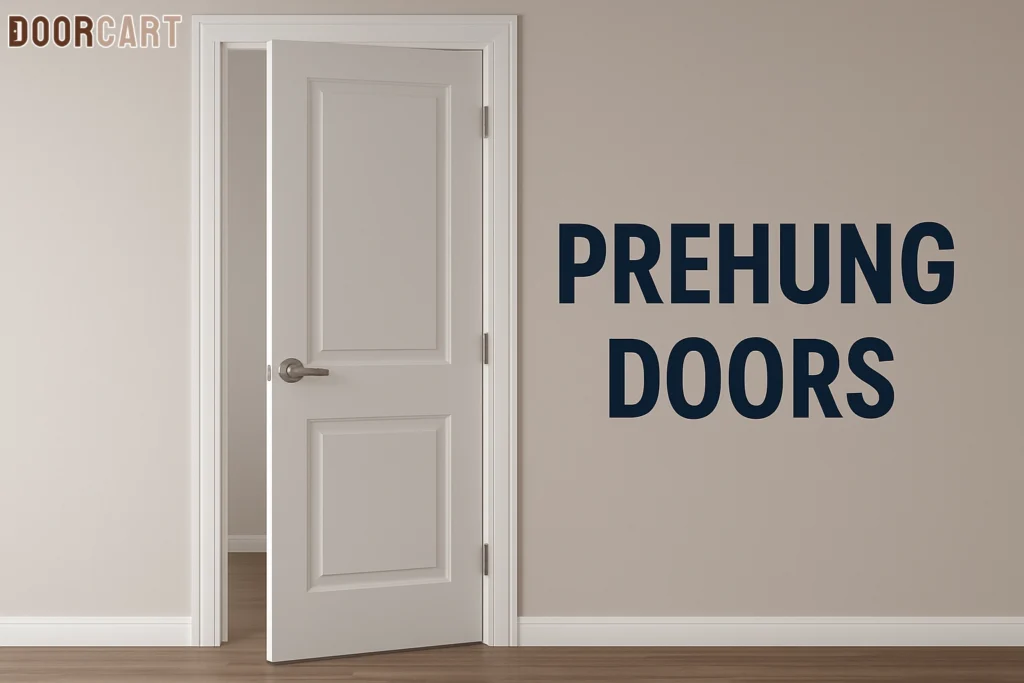
For Canadian homeowners tackling a renovation or new build, the choice of interior doors is a crucial decision impacting aesthetics, functionality, and that all-important winter warmth. While the simple “door slab” may seem like the economical choice, the prehung doors is often the smarter, more efficient solution for the DIYer and professional alike, especially in the context of Canada’s unique climate and building standards.
What Exactly is a Prehung Door?
A prehung door is a complete door system, purchased as a single, ready-to-install unit. It includes:
- The Door Slab: The actual door itself.
- The Frame (Jamb): The surrounding wood (typically pine or finger-jointed pine) that holds the door in place. This includes the two side jambs and the head jamb across the top.
- The Hinges: Already mortised (recessed) and attached to both the door and the frame.
- The Door Stop: The moulding attached to the jamb that the door closes against.
- Pre-Drilled Hardware Holes: A bore for the latch and often a recess for the strike plate.
In essence, the manufacturer has done the precise carpentry work for you. Your task shifts from building a frame and chiseling hinge mortises to simply fitting this pre-assembled unit into a rough opening in your wall.
Why Prehung Doors are Ideal for the Canadian Market
- Climate and Energy Efficiency: Canada’s harsh winters make airtight seals a priority. Quality prehung doors come with an integrated thermal break in the jamb and are designed to work seamlessly with weatherstripping. This minimizes drafts, reduces heat loss, and prevents cold spots—a key consideration for both comfort and energy bills. Properly installed, they contribute to a tighter building envelope.
- Ease of Installation for DIYers: Canadian homeowners are famously hands-on. Prehung doors dramatically simplify the installation process. The hardest parts—ensuring the hinges are perfectly aligned and the door slab swings freely within the frame—are already done. This reduces the risk of errors like binding doors, uneven gaps, or improper closure, which are common with slab installations.
- Time and Cost Efficiency: While the upfront cost of a prehung door is higher than a slab, it can be more cost-effective overall. It saves countless hours of skilled labour. For contractors, this means faster project completion. For DIYers, it means less time spent on frustrating fine-tuning and a higher likelihood of professional-looking results on the first try.
- Compatibility with Canadian Standards: Reputable suppliers in Canada stock prehung doors designed for standard Canadian rough openings (typically 2″ wider and 2-1/2″ taller than the door size). They are also available in standard Canadian heights (80″ for most interiors, 96″ for some modern or exterior applications) and widths (24″, 28″, 30″, 32″, 36″).
Key Considerations When Buying Prehung Doors in Canada
- Material: Solid wood (like oak, maple, or hemlock) offers beauty and solidity but can be susceptible to humidity swings. Hollow-core doors are lightweight, affordable, and standard for most interiors. Solid-core doors are heavier, provide better sound insulation and fire ratings, and feel more substantial—a premium choice for bedrooms, offices, or entries to noisy areas.
- Handing: You must determine the “hand” of the door. Stand on the side where the door opens away from you. If the hinges are on your left, it’s a left-hand (LH) door. If on the right, it’s a right-hand (RH) door. Canadian suppliers will ask for this.
- Swing: Do you need an in-swing (into the room) or out-swing door? For exterior doors in snowy regions like Alberta or Quebec, out-swing doors are less likely to be forced in by snowdrift and can provide better water shedding.
- Primed vs. Pre-Finished: Most prehung doors come primed, ready for you to paint to match your trim. Some are available pre-finished with a wood veneer or paint, saving a finishing step.
- Bore: The standard is a 2-1/8″ bore for the doorknob latch. Ensure this matches your chosen hardware. Many doors now also come with a prepped opening for a modern, streamlined lever handle.
The Installation Process: A Canadian Context
Installing a prehung door in Canada follows a standard process, with a few local considerations:
- Prepare the Rough Opening: Ensure the opening in your framed wall is plumb, level, and square, and that it meets the required dimensions. In older Canadian homes, be prepared to shim extensively to compensate for settling.
- Test Fit the Unit: Carefully place the prehung assembly into the opening. Use wooden shims to centre it and create an even gap (usually about 1/8″) around the entire perimeter.
- Secure the Frame: Using a level, plumb the hinge-side jamb first. Secure it to the wall framing with long screws or nails through the shims. Never fasten directly without a shim behind, as this can warp the frame. Repeat for the head jamb and latch-side jamb.
- Insulate and Seal: This is a critical step for Canadian energy efficiency. Use low-expansion spray foam designed for windows and doors to insulate the gap between the door jamb and the wall framing. Avoid high-expansion foam, as it can warp the frame. Apply weatherstripping as per the manufacturer’s instructions.
- Attach Trim (Casing): Install your interior casing (trim) around the door to cover the gap between the jamb and the wall. In Canada, wider casing profiles (like 2-1/4″ or 3-1/2″) are common.
- Install Hardware: Insert the latch mechanism and bolt it into the pre-drilled hole. Attach the doorknob or lever handles to both sides. Finally, install the strike plate on the door jamb.
Where to Buy Prehung Doors in Canada
Canadian homeowners have several excellent options:
- Big-Box Retailers (Home Depot, Lowe’s, RONA): Offer a wide range of standard, affordable prehung doors (primarily hollow-core and some solid-core) with good availability and seasonal sales.
- Building Supply & Lumber Yards (Home Hardware, Tim-BR Mart, local independents): Often provide higher-quality products, better service, and expert advice tailored to local building practices and codes.
- Specialty Door and Millwork Shops: The go-to for custom sizes, premium solid wood doors, unique designs, and architectural-grade products.
The Verdict: Are Prehung Doors Worth It?
For the vast majority of interior door replacements and new installations in Canada, yes. The advantages of ease, time savings, and a superior, draft-resistant fit are compelling. While a seasoned carpenter can expertly hang a slab door in a custom existing frame, the precision and efficiency of a prehung system are hard to beat for both professionals and ambitious DIYers.
By choosing a quality prehung doors and installing it with care—paying special attention to insulation and sealing—you invest in an element that enhances your home’s style, function, and energy performance for years to come. It’s a solution built not just for beauty, but for the realities of the Canadian home.